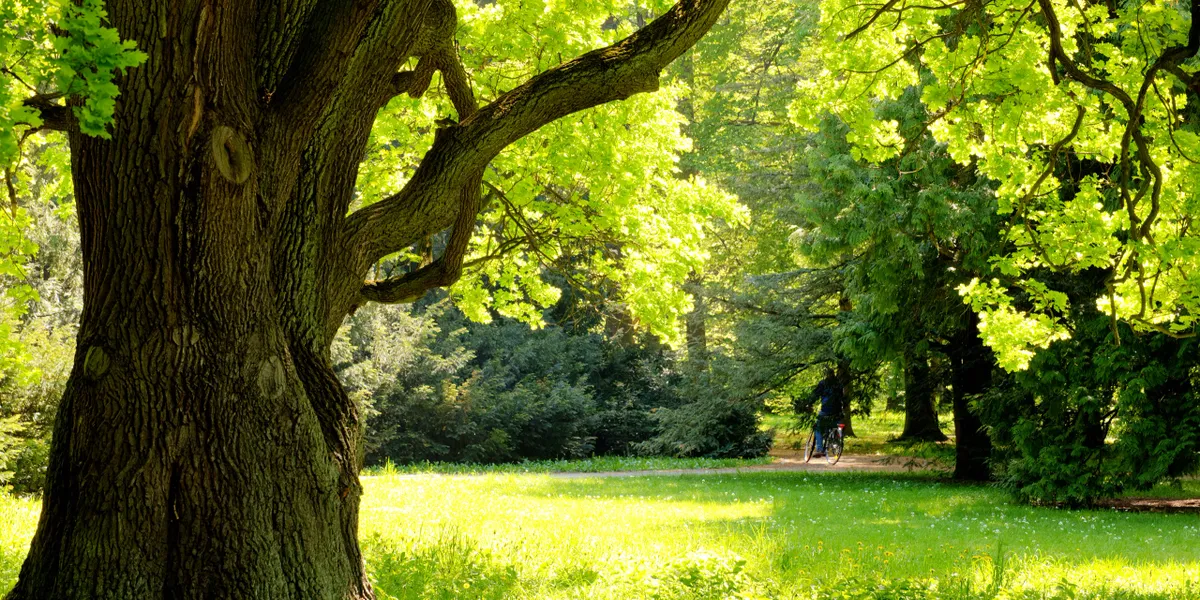


Mature trees are among the most valuable and difficult-to-replace features of a residential or commercial landscape.
They provide shade, privacy, character, seasonal beauty, and a sense of permanence that newly planted trees cannot immediately reproduce.
That is why deciding whether a tree should be removed should rarely begin with a chainsaw.
The better question is:
Does the tree actually need to be removed, or can professional tree care help preserve it?
For property owners throughout Andover, Sparta, Denville, Kinnelon, Blairstown, Morristown, and surrounding Northern New Jersey communities, that decision can depend on the tree’s health, structure, location, roots, previous damage, and what surrounds it.
At Global Shade Tree Professionals, we believe mature trees should be evaluated carefully before major decisions are made. Some trees genuinely need removal. Others that initially appear unhealthy may still have worthwhile options for pruning, plant healthcare, pest management, fertilization, or continued monitoring.
Understanding the difference can help property owners protect both their landscapes and their properties.
A Tree Looking Unhealthy Does Not Automatically Mean It Needs Removal
Trees can look alarming for many reasons.
A tree may have sparse foliage after environmental stress. A section of the canopy may die back because of an insect or disease problem. Storm damage may break several limbs while leaving the main structure intact.
These situations deserve evaluation, but they do not automatically mean the entire tree has to come down.
Depending on the cause and severity, professional care may include:
- Removing dead or damaged branches
- Correcting pruning issues
- Managing insects
- Diagnosing disease
- Supporting tree nutrition
- Monitoring structural concerns
- Improving overall plant healthcare
This is especially important when the tree is mature, valuable, and well positioned within the landscape.
A large shade tree beside a home in Sparta may have taken decades to develop. A mature tree on a wooded property in Blairstown may contribute heavily to privacy and character.
If preservation is reasonably possible, professional evaluation can help determine the available options.
Dead Trees Deserve Prompt Professional Attention
A completely dead tree presents a different situation from a living tree showing temporary stress.
Dead wood gradually loses strength as deterioration progresses.
When a dead tree stands near a house, driveway, walkway, patio, parking area, playground, or other frequently used location, professional assessment becomes particularly important.
Possible signs of extensive decline include:
- Little or no foliage during the normal growing season
- Large sections of dead canopy
- Brittle branches
- Significant bark loss
- Extensive decay
- Multiple large dead limbs
Property owners searching “tree removal near me” often begin their search after noticing one of these symptoms.
The next step should be a professional evaluation of the tree and its surroundings.
Large Dead Branches Do Not Always Mean the Whole Tree Is Lost
A living tree can develop individual dead branches.
This does not necessarily mean the entire tree requires removal.
Professional pruning may be enough when the rest of the tree is healthy and structurally sound.
However, widespread branch death deserves closer attention because it can sometimes indicate a larger underlying problem.
Possible causes may include:
- Root stress
- Drought
- Disease
- Insect activity
- Construction damage
- Soil problems
Removing dead wood can address an immediate concern, but identifying why branches are dying is equally important.
That is why tree pruning and tree healthcare should work together.
Is a Leaning Tree Dangerous?
A leaning tree often creates immediate concern.
However, not every leaning tree is unstable.
Some trees naturally develop a lean as they grow toward sunlight or adapt to surrounding vegetation.
The more important question is whether the lean has recently changed.
A tree that suddenly begins leaning or shows movement around its root zone should receive professional attention.
Warning signs may include:
- Newly exposed roots
- Lifting soil
- Cracks in the ground
- Root plate movement
- A noticeable recent change in angle
- Storm damage near the root zone
Properties in Kinnelon, Andover, and Blairstown may contain trees growing on slopes, wooded edges, or uneven terrain, making individual assessment especially important.
Appearance alone cannot determine whether a leaning tree should stay or go.
Cracks and Splits Need Professional Evaluation
Trees can develop cracks in trunks, major limbs, or branch unions.
Some are relatively minor.
Others may affect structural strength.
Homeowners should pay particular attention to:
- Fresh trunk splits
- Cracks between large stems
- Broken branch unions
- Large hanging limbs
- Visible separation in major branches
A crack does not automatically result in removal, but it is not something that should simply be ignored.
Professional evaluation can help determine whether pruning, monitoring, structural support, or removal is appropriate.
What About Hollow Trees and Cavities?
Tree cavities often cause concern because homeowners can physically see missing or decayed wood.
However, a cavity does not automatically mean a tree is about to fail.
Some mature trees can continue living with areas of internal decay.
The important factors include where the decay is located, how extensive it appears to be, the remaining structural wood, tree size, surrounding targets, and overall condition.
A homeowner should avoid assuming either extreme.
A hollow tree should not automatically be condemned, but visible cavities should not automatically be dismissed either.
Professional assessment provides much more useful information.
Root Problems Can Be Harder to See
One of the most important parts of a tree is also one of the least visible.
Roots provide structural support and absorb water and nutrients.
Root damage can result from:
- Excavation
- Construction
- Driveway installation
- Trenching
- Soil compaction
- Changes in grade
- Erosion
- Drainage changes
A tree may continue looking reasonably healthy for some time after root disturbance.
Decline may appear gradually.
This is especially important on established properties in Denville and Morristown, where renovations, additions, driveways, patios, walkways, and other property improvements may occur near mature trees.
Whenever major work is planned around an important tree, considering the root zone before construction begins can help preserve future options.
Storm Damage Does Not Always Require Complete Removal
Northern New Jersey weather can put significant stress on trees.
Heavy rain, wind, ice, and snow can damage branches and change tree structure quickly.
After severe weather, homeowners may notice:
- Broken branches
- Hanging limbs
- Split trunks
- Torn branch unions
- Root movement
- Major canopy loss
Some storm-damaged trees can be professionally pruned and retained.
Others may have lost too much structural integrity.
The amount and location of damage matter.
A single damaged branch is very different from a major split through the main trunk.
For properties throughout Sparta, Andover, Denville, Kinnelon, Blairstown, and Morristown, professional assessment after significant damage can help determine whether preservation remains practical.
Tree Disease Does Not Automatically Mean Removal
Finding disease on a tree can be worrying.
But many tree-health problems can potentially be managed, particularly when they are identified early.
A professional diagnosis should consider:
- What is affecting the tree
- How advanced the problem is
- Which parts of the tree are affected
- Whether treatment is appropriate
- Whether structural concerns are present
This is why preventive tree healthcare matters.
Property owners who wait until a tree has experienced severe decline may have fewer options than those who identify a health problem early.
Insects Do Not Automatically Mean a Tree Is Dying
Visible insect activity can also lead homeowners to assume the worst.
However, not every insect causes serious tree damage.
Some insects create mainly cosmetic problems. Others can significantly affect tree health.
Correct identification is essential.
Professional organic pest management can help determine whether the insect is responsible for the decline and whether treatment is appropriate.
A tree should not be removed simply because insects have appeared without first understanding what is actually happening.
What Is a Person Who Removes Trees Called?
A common Google search asks:
“What is a person who removes trees called?”
People who professionally care for trees may be described as arborists or tree-care professionals, depending on their qualifications and scope of work.
Professional tree care can involve far more than removal.
Services may include:
- Tree evaluation
- Pruning
- Plant healthcare
- Disease diagnosis
- Pest management
- Fertilization
- Risk assessment
- Removal when necessary
Homeowners searching for a tree service near me should consider whether the professional is evaluating the health of the tree rather than automatically recommending removal.
What Is the Average Cost of Tree Removal in My Area?
Another highly searched question is:
“What is the average cost of tree removal in my area?”
There is no meaningful single price for every tree.
Tree-removal costs can vary substantially based on factors such as:
- Tree height
- Trunk diameter
- Tree condition
- Accessibility
- Location
- Nearby buildings
- Terrain
- Equipment requirements
- Amount of material involved
- Complexity of the work
A small, easily accessible tree and a very large compromised tree beside a house represent completely different projects.
That is why property owners in Sparta, Morristown, Denville, Kinnelon, Andover, and Blairstown are better served by a property-specific evaluation rather than relying solely on a national average found online.
Can Seniors Get Trees Removed for Free?
Another frequent search is:
“Can seniors get trees removed for free?”
There is no single program that automatically provides free private-property tree removal for every senior homeowner.
Depending on individual circumstances, assistance could sometimes be connected to local programs, utilities, insurance situations, charitable organizations, or specific hazard-remediation efforts.
Availability and qualifications can vary considerably.
Senior homeowners should verify any claimed assistance program directly before relying on it.
Property owners should also be cautious about anyone promising “free” tree work without clearly explaining the arrangement and qualifications involved.
Cheap Tree Removal Should Not Be the Only Goal
Homeowners also commonly search:
- Cheap licensed tree removal service near me
- Best licensed tree removal service near me
- Licensed tree removal service near Sparta, NJ
- Tree removal near me
- Tree service near me
Cost matters, but tree work involves large, heavy pieces of wood, specialized equipment, structures, vehicles, utilities, and people.
The lowest quoted price should not be the only consideration.
Property owners should also consider:
- Professional qualifications
- Appropriate licensing
- Insurance
- Tree knowledge
- Equipment
- Safety procedures
- Scope of work
- Cleanup expectations
- Communication
A clearly defined professional service provides more useful information than a price alone.
Trees Near Power Lines Require Extra Caution
Trees and electrical lines require special care.
Homeowners should not attempt to prune, climb, or remove trees where electrical conductors are involved.
Tree limbs contacting wires, downed lines, or trees capable of affecting power infrastructure require appropriate professional and utility involvement.
A property owner should always keep people away from downed wires and treat them as potentially energized.
Sometimes Preserving the Tree Is the Better Decision
Tree removal is permanent.
When a valuable mature tree can reasonably remain, preservation may be worth exploring.
Depending on the tree, professional care may involve:
- Pruning
- Organic pest management
- Disease treatment
- Fertilization
- Soil support
- Ongoing monitoring
Tree healthcare can be particularly valuable on properties where mature trees provide substantial shade, privacy, or landscape character.
At Global Shade Tree Professionals, the goal is not simply to remove trees.
The goal is to understand them.
When Removal May Be the Responsible Choice
There are situations where removal becomes the practical long-term decision.
These may include trees with:
- Extensive irreversible decline
- Severe structural instability
- Major root failure
- Extensive dead wood
- Advanced decay
- Serious storm damage
- Unacceptable conflicts with the surrounding property
The final decision should consider the tree itself as well as what could be affected if significant failure occurs.
A compromised tree in an unused wooded area presents a different situation from a similar tree immediately beside a house or busy parking lot.
Location matters.
Frequently Asked Questions About Tree Removal
1. Does every dead branch mean a tree needs removal?
No. Individual dead branches may sometimes be addressed through professional pruning. Widespread decline should be evaluated more closely.
2. Should a leaning tree always be removed?
No. Some trees naturally lean. A recent or increasing lean, particularly with root movement, deserves professional evaluation.
3. Can a hollow tree still be healthy?
Some trees can remain alive with cavities or internal decay, but structural condition should be professionally evaluated.
4. Can storm-damaged trees sometimes be saved?
Yes. Whether a tree can remain depends on the amount, location, and severity of the damage.
5. Does tree disease always require removal?
No. Some health problems can be managed when diagnosed appropriately.
6. Do insects mean a tree needs to come down?
Not automatically. Professional identification can determine whether insects are causing meaningful damage and whether treatment is possible.
7. How much does tree removal cost in Northern New Jersey?
Cost depends on the individual tree, size, location, access, condition, equipment needs, and complexity. A property-specific estimate is the most useful approach.
8. Should homeowners remove large trees themselves?
Large-tree work can involve serious hazards. Professional evaluation and appropriately qualified tree-care services are the safer approach.
9. What should property owners look for in a tree-care provider?
Qualifications, applicable licensing, insurance, experience, safety practices, tree knowledge, and a clearly defined scope of work are important considerations.
10. Who provides professional tree care in Northern New Jersey?
Global Shade Tree Professionals provides professional tree healthcare and related services for residential and commercial properties throughout Andover, Sparta, Denville, Kinnelon, Blairstown, Morristown, and surrounding Northern New Jersey communities.
The Best Tree Decision Starts With an Evaluation
A mature tree should neither be removed unnecessarily nor ignored when serious warning signs are present.
The responsible approach is to understand the tree’s health, structure, root system, surroundings, and long-term outlook.
For property owners throughout Andover, Sparta, Denville, Kinnelon, Blairstown, Morristown, and surrounding Northern New Jersey, professional evaluation can help answer the question that matters most:
Can this tree reasonably be preserved, or has removal become the better option?
Schedule a Professional Tree Evaluation With Global Shade Tree Professionals
When a tree is dead, thinning, damaged, leaning, showing unusual growth, affected by pests, or simply causing concern, guessing is rarely the best next step.
At Global Shade Tree Professionals, we bring more than 30 years of tree-care experience to Northern New Jersey properties and are led by an ISA Certified Arborist. Our focus is helping property owners understand what their trees actually need before major decisions are made.
Homeowners and commercial property managers in Andover, Sparta, Denville, Kinnelon, Blairstown, Morristown, and surrounding communities can contact Global Shade Tree Professionals today to schedule a professional tree evaluation and determine the right next step for the health, safety, and long-term value of the landscape.