
A tree can look strong above ground while serious problems are developing beneath the surface. Property owners naturally notice leaves, branches, bark, and the overall shape of a tree, but some of the most important indicators of long-term tree health are found where the trunk meets the soil and throughout the surrounding root zone.
Tree roots do far more than hold a tree in place. They absorb water, collect essential nutrients, store energy, and provide the structural support needed to keep mature trees stable during wind, rain, snow, and changing weather conditions. When roots become damaged, compacted, diseased, or deprived of oxygen, the entire tree can eventually suffer.
For homeowners and commercial property managers throughout Andover, Sparta, Denville, Kinnelon, Blairstown, Morristown, Newton, Hackettstown, Randolph, Roxbury, and surrounding Northern New Jersey communities, understanding the early signs of root stress can make the difference between preserving a valuable mature tree and facing an unexpected removal.
At Global Shade Tree Professionals, we take a complete approach to tree health. We look beyond what is happening in the canopy and consider the soil, root environment, surrounding landscape, pests, nutrition, and structural condition of each tree. When property owners recognize root problems early, there are often more opportunities to improve growing conditions and protect the tree for years to come.
Why Tree Roots Matter So Much
A healthy canopy begins with a healthy root system.
Roots continually supply trees with the water and nutrients required for growth. They also anchor trees to the ground, helping them remain stable as their canopies move during storms.
When root systems are functioning properly, trees are better equipped to:
- Produce healthy foliage
- Develop strong branches
- Recover from environmental stress
- Tolerate periods of dry weather
- Defend against certain pests and diseases
- Remain structurally stable
Root problems can disrupt all of these processes.
Unfortunately, because much of the root system is underground, damage may continue for months or even years before the symptoms become obvious.
Warning Sign #1: The Tree Is Suddenly Leaning
Not every leaning tree is dangerous.
Some trees naturally grow at an angle and remain structurally stable for decades. However, a tree that has recently begun leaning deserves professional attention.
A new or increasingly noticeable lean may indicate:
- Root failure
- Saturated soil
- Storm damage
- Soil movement
- Structural instability
Property owners should be particularly attentive when a leaning tree is located near a house, garage, driveway, walkway, parking area, or commercial building.
After severe storms in areas such as Sparta, Kinnelon, and Blairstown, checking mature trees for changes in position can be an important part of property maintenance.
Warning Sign #2: Soil Is Lifting Around the Base
One of the more concerning signs of possible root instability is soil movement around a tree.
If the ground appears raised, cracked, or disturbed on one side of the trunk, the root plate may be shifting.
This can sometimes happen following:
- Strong winds
- Prolonged rainfall
- Saturated soil
- Root damage
- Severe storms
Visible soil movement should not be ignored, especially around large mature trees.
A professional tree evaluation can help determine whether the tree remains structurally stable.
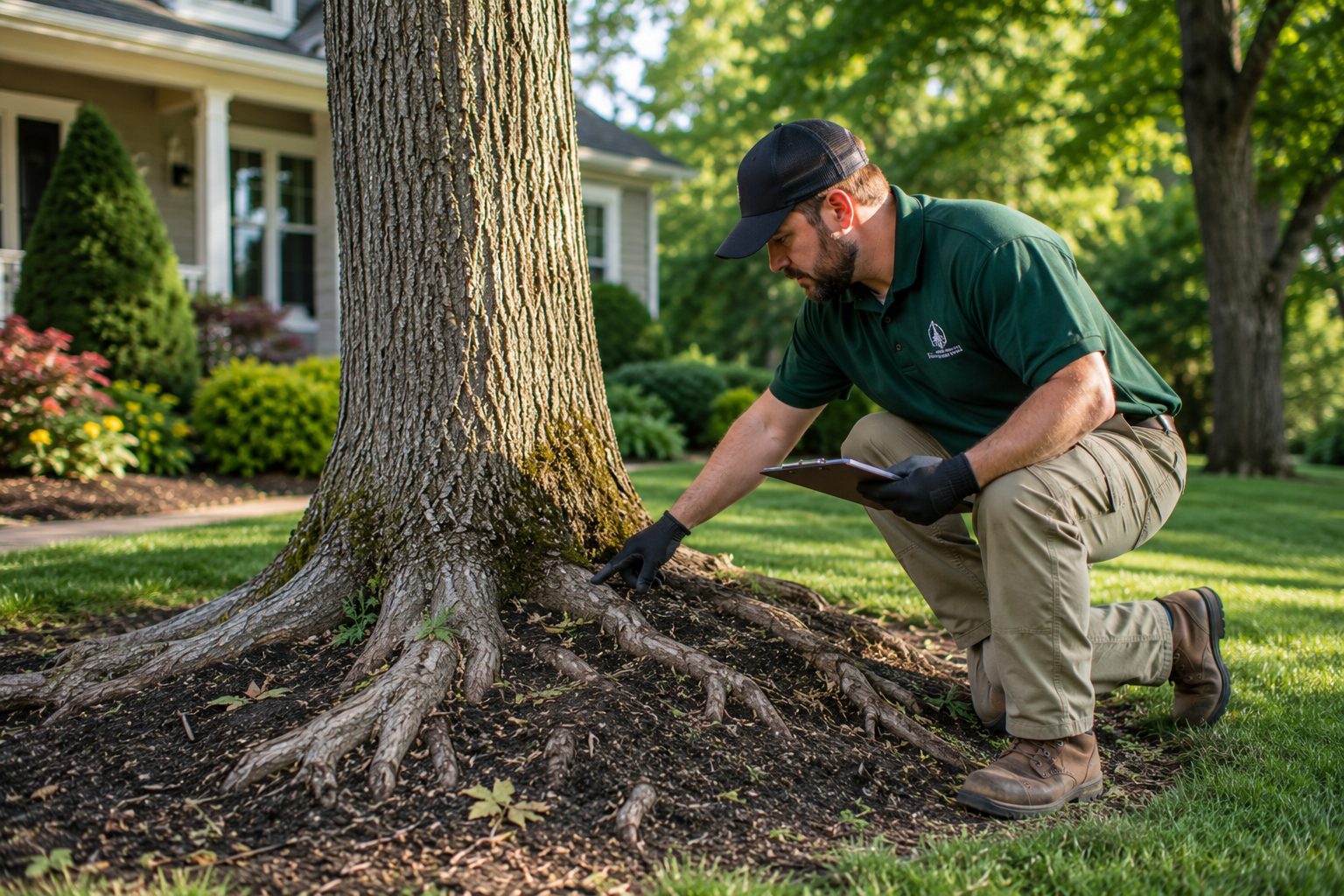
Warning Sign #3: The Root Flare Has Disappeared
Healthy mature trees typically widen naturally where the trunk meets the ground. This area is known as the root flare.
A tree that appears to enter the ground like a straight telephone pole may have excessive soil or mulch covering its natural root flare.
This can create unhealthy conditions around the base of the tree.
Excessive soil or mulch may contribute to:
- Poor oxygen availability
- Excess moisture
- Bark deterioration
- Abnormal root development
Proper mulch placement and root-zone management are simple but important components of professional tree care.
Warning Sign #4: Roots Are Being Damaged by Construction
Construction is one of the most common sources of hidden tree stress.
Projects involving:
- New driveways
- Patios
- Walkways
- Utility installation
- Drainage improvements
- Building additions
- Landscape renovations
can disturb or remove important roots.
The damage may not immediately appear in the canopy. A tree can continue looking healthy temporarily while operating on stored energy.
Months or even years later, property owners may begin noticing thinning foliage, branch dieback, or reduced vigor.
For properties undergoing improvements in Denville, Morristown, Randolph, or Roxbury, considering existing trees before construction begins can help prevent avoidable damage.
Warning Sign #5: The Canopy Is Becoming Thin
Sometimes the first visible evidence of root trouble appears high above the ground.
When roots cannot absorb enough moisture or nutrients, the tree may no longer be able to support its entire canopy.
Property owners may notice:
- Fewer leaves
- Smaller leaves
- Dead twigs
- Sparse branches
- Early leaf drop
- Reduced growth
A thinning canopy does not automatically mean there is a root problem. Insects, disease, drought, and other conditions can produce similar symptoms.
That is why professional diagnosis matters.
Instead of treating the visible symptom alone, we look for the underlying cause.
Compacted Soil Can Slowly Damage Trees
Soil compaction is particularly common around residential developments and commercial properties.
Heavy equipment, vehicles, construction activity, and repeated foot traffic can compress soil particles together.
Compacted soil contains less space for water and oxygen.
Tree roots need both.
Over time, severe compaction may limit root development and reduce the tree’s ability to absorb essential resources.
Trees surrounding commercial buildings, apartment communities, parking areas, schools, and heavily used residential landscapes can be especially vulnerable.
Professional soil management can help improve the growing environment around valuable trees.
Too Much Water Can Be Just as Harmful as Too Little
Trees need moisture, but roots also require oxygen.
When soil remains saturated for extended periods, oxygen availability can decline significantly.
Poor drainage may develop because of:
- Low areas in the landscape
- Heavy soil
- Improper grading
- Irrigation problems
- Drainage changes
- Repeated heavy rainfall
Signs of excessive moisture may include declining foliage, fungal activity, or poor overall growth.
A professional evaluation considers drainage conditions alongside tree health rather than assuming every declining tree simply needs more water.
Drought Stress Also Affects Root Systems
The opposite problem can occur during extended periods of hot, dry weather.
Without sufficient moisture, fine absorbing roots can become stressed. The tree may then struggle to transport enough water throughout its canopy.
Mature trees can sometimes tolerate temporary dry conditions, but prolonged drought may weaken them.
Trees already experiencing problems from insects, disease, poor soil, or construction damage may be especially vulnerable.
Supporting overall tree health before environmental stress becomes severe is one reason preventive care is so valuable.
Healthy Soil Is Part of Root Care
Tree care does not stop at the trunk.
Healthy soil supports the biological and physical environment roots need to function properly.
Depending on property conditions, professional care may involve:
- Soil evaluation
- Fertilization
- Organic soil improvement
- Root-zone management
- Proper mulching
- Pest monitoring
Fertilization should be based on actual tree and soil needs rather than applied simply because a tree exists.
At Global Shade Tree Professionals, we consider the complete landscape before recommending a tree fertilization program.
Root Stress Can Make Trees More Vulnerable to Pests
Stressed trees may become less capable of defending themselves against certain insects and diseases.
This creates an important connection between root health and organic pest control.
Treating insects without addressing the underlying stress may provide incomplete results.
A comprehensive approach considers questions such as:
- Why did the tree become vulnerable?
- Are soil conditions contributing?
- Is the tree receiving appropriate nutrition?
- Has construction damaged roots?
- Is drainage creating stress?
- Does the canopy require professional pruning?
By considering the entire tree, we can develop a more meaningful long-term care strategy.
Proper Pruning Helps a Stressed Tree
When appropriate, professional pruning can support overall tree management.
Removing dead, damaged, or structurally problematic branches may improve canopy condition and reduce unnecessary hazards.
However, stressed trees require careful evaluation.
Aggressive or unnecessary pruning can create additional stress.
Professional recommendations should reflect the species, condition, age, structure, and overall health of the individual tree.
When Tree Removal Becomes the Safer Option
Preserving healthy mature trees is valuable, but not every compromised tree can or should be saved.
If severe root failure has significantly reduced structural stability, professional tree removal may become the responsible choice.
Removal may be considered when a tree presents an unacceptable risk to:
- Homes
- Vehicles
- Walkways
- Businesses
- Parking areas
- Outdoor living spaces
- People
The decision should be based on professional evaluation rather than appearance alone.
This is especially important for large trees located near structures throughout Andover, Sparta, Newton, Hackettstown, and other Northern New Jersey communities.
Commercial Properties Need Root-Zone Protection Too
Commercial trees often grow under challenging conditions.
Parking lots, sidewalks, compacted soil, limited planting spaces, construction, and high pedestrian activity can all influence root health.
Routine commercial tree care helps property managers identify declining trees before they become expensive problems.
Proactive maintenance can support:
- Safer parking areas
- Clear pedestrian routes
- Attractive entrances
- Healthier landscaping
- Better long-term budgeting
Maintaining mature trees can also preserve the established appearance that makes a commercial property feel welcoming.
Preventive Care Is Easier Than Emergency Care
Many serious tree problems develop gradually.
Waiting until a tree begins dropping large limbs or visibly leaning can dramatically reduce the available options.
Routine professional tree inspections allow us to identify changes earlier.
Preventive tree care may include:
- Health assessments
- Structural evaluations
- Professional pruning
- Fertilization
- Soil management
- Organic pest control
- Shrub care
The goal is not to perform unnecessary services. It is to understand what the landscape actually needs and address concerns at the appropriate time.
Look at the Whole Landscape
Trees do not grow independently from their surroundings.
Shrubs, lawns, drainage patterns, soil conditions, insects, mulch, construction, and nearby structures all influence tree health.
That is why comprehensive landscape care can be so valuable.
For example, professional shrub care can improve airflow and organization within planting areas, while mosquito and tick control can make those same outdoor spaces more comfortable for people using them.
Each service addresses a different part of the landscape, but together they contribute to a healthier, better-maintained property.
Frequently Asked Questions
What are the most common signs of tree root problems?
A new lean, lifting soil, canopy thinning, exposed or damaged roots, poor growth, and dieback can all indicate potential root stress.
Are exposed tree roots always unhealthy?
No. Some surface roots are normal, particularly on mature trees. Problems arise when roots are repeatedly damaged, cut, compacted, or otherwise disturbed.
Can cutting tree roots cause a tree to fall?
Significant root damage can affect structural stability. The level of risk depends on which roots were damaged, how much damage occurred, tree species, soil conditions, and other factors.
Can construction damage a tree even if the trunk is untouched?
Yes. Construction can damage roots through excavation, grading, compaction, and equipment traffic even when the trunk itself is never contacted.
Should soil be piled over exposed roots?
Adding excessive soil can change oxygen and moisture conditions around roots. Professional evaluation is preferable before significantly altering the root zone.
Does fertilization repair damaged roots?
Fertilization cannot physically restore severed roots. However, appropriate nutrition and soil care may support overall tree health when nutrient deficiencies or poor growing conditions are present.
Can root problems cause dead branches?
Yes. A compromised root system may be unable to supply sufficient water and nutrients to the entire canopy, potentially contributing to branch dieback.
Should a leaning tree automatically be removed?
No. Some healthy trees naturally lean. A new or worsening lean, particularly following a storm, should be professionally evaluated.
How can commercial properties protect tree roots?
Reducing soil compaction, limiting unnecessary excavation around trees, maintaining appropriate mulch, and scheduling professional inspections can help protect commercial trees.
Why choose Global Shade Tree Professionals for tree care?
We provide comprehensive tree and landscape services designed around the actual needs of residential and commercial properties. Our services include tree care, tree removal, professional evaluations, fertilization, shrub care, organic pest control, mosquito control, and tick control throughout Northern New Jersey.
Protect the Health of Your Trees from the Ground Up
A beautiful canopy starts below ground. When roots are healthy, trees have a stronger foundation for absorbing nutrients, managing environmental stress, producing healthy foliage, and remaining structurally stable.
At Global Shade Tree Professionals, we help residential and commercial property owners understand what their trees are telling them before small concerns develop into major problems.
We proudly provide professional tree care, tree removal, fertilization, shrub care, organic pest control, mosquito control, tick control, and preventive landscape services throughout Andover, Sparta, Denville, Kinnelon, Blairstown, Morristown, Newton, Hackettstown, Randolph, Roxbury, and surrounding Northern New Jersey communities.
Phone: 973-398-0682
Email: globalshadetree@aol.com
Contact Global Shade Tree Professionals today to schedule a professional tree evaluation and give your trees the healthy foundation they need for stronger, safer growth for years to come.