
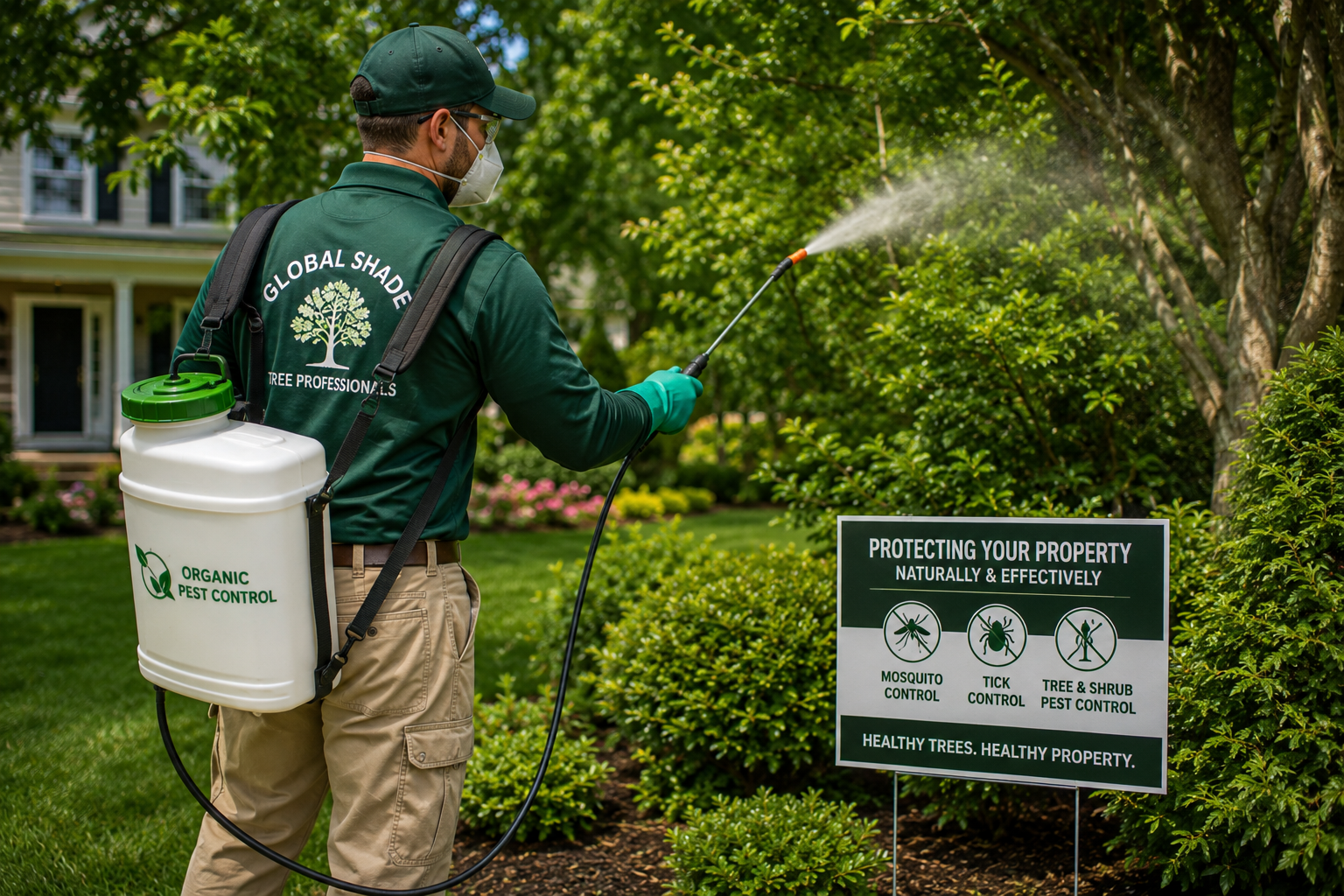
When homeowners notice damaged leaves, insects crawling across shrubs, mosquitoes around the patio, or ticks near wooded areas, the first instinct may be simple: find something to spray.
Professional pest management should be much more thoughtful than that.
A healthy landscape contains insects, microorganisms, birds, pollinators, and countless other forms of life. Seeing an insect does not automatically mean a pesticide treatment is necessary. At the same time, ignoring a genuine pest problem can allow damage to progress until trees, shrubs, or outdoor living areas are significantly affected.
The difference comes down to proper identification, appropriate treatment, and professional application.
Throughout Andover, Sparta, Denville, Kinnelon, Blairstown, Morristown, Newton, Hackettstown, Randolph, Roxbury, Byram, Hopatcong, and surrounding Northern New Jersey communities, property owners face a wide variety of landscape pest pressures during the year.
At Global Shade Tree Professionals, we approach pesticide and pest-control services as part of comprehensive property care. We focus on identifying what is causing the problem, determining whether treatment is appropriate, and integrating pest management with professional tree healthcare, shrub care, disease diagnosis, fertilization, mosquito control, and tick control.
Professional Pest Control Begins With Identification
One of the biggest mistakes in landscape pest management is treating a symptom without understanding its cause.
Consider a shrub with yellow leaves.
The problem could potentially involve:
- Insects
- Disease
- Poor drainage
- Drought stress
- Root damage
- Soil conditions
- Nutritional problems
Applying a pesticide to a plant suffering from poor drainage will not correct the problem.
Likewise, adding fertilizer to a tree experiencing damaging pest activity does not necessarily address the pest.
Professional evaluation helps determine what is actually happening before a treatment program begins.
Not Every Bug Is a Bad Bug
Landscapes naturally contain insects.
Many are harmless, and others play valuable roles in the environment.
Beneficial insects may contribute to:
- Pollination
- Natural pest regulation
- Decomposition
- Healthy ecological activity
This is why responsible pesticide service should never be based on the idea that every insect needs to disappear.
The objective is to manage pests that are creating genuine problems while maintaining a healthier overall landscape.
At Global Shade Tree Professionals, our emphasis on organic pest-management methods supports this more thoughtful approach.
Tree Pests Can Be Easy to Miss
Large trees can conceal developing insect problems surprisingly well.
A pest may begin affecting individual leaves, branches, or bark long before the entire tree looks unhealthy.
Property owners should watch for changes such as:
- Unusual holes in leaves
- Chewed leaf edges
- Curling foliage
- Sticky residue
- Premature leaf loss
- Bark abnormalities
- Small holes in branches or trunks
- Progressive branch dieback
- Thinning sections of canopy
None of these symptoms automatically confirms a particular pest.
They are signals that professional evaluation may be appropriate.
Shrubs Can Show Pest Problems Faster
Because shrubs are smaller and often contain dense foliage, pest activity may become visible more quickly.
Property owners may notice:
- Distorted new growth
- Webbing
- Leaf spots
- Chewed foliage
- Sticky leaves
- Browning sections
- Dead stems
- Reduced flowering
Professional shrub healthcare can help identify whether the problem involves insects, disease, environmental stress, or several conditions occurring at the same time.
The earlier the cause is identified, the more opportunities there may be to protect established plants.
Organic Pest Control Is Part of Plant Healthcare
Pest control should not exist separately from tree and shrub health.
A stressed plant may be less resilient when damaging insects become active.
Trees and shrubs can experience stress from:
- Drought
- Compacted soil
- Root disturbance
- Poor drainage
- Nutritional limitations
- Construction
- Improper pruning
- Weather extremes
When these conditions are present, simply addressing the pest may provide an incomplete solution.
A comprehensive plant-health strategy asks an additional question:
Why was this plant vulnerable in the first place?
Improving soil, nutrition, root conditions, or overall maintenance may therefore become part of the long-term strategy.
Timing Can Make a Major Difference
Pest populations and plant development change throughout the growing season.
The effectiveness of a treatment may depend heavily on when a particular pest is active or vulnerable.
This is one reason waiting until damage becomes severe is not always the best approach.
Routine property monitoring allows professionals to recognize changes earlier and plan treatments according to actual conditions.
For property owners throughout Sparta, Denville, Morristown, Kinnelon, and surrounding areas, seasonal plant-health evaluations can help identify developing pest pressure before extensive damage becomes obvious.
Mosquito Control Addresses a Different Kind of Pest Problem
Not every pest damages plants.
Mosquitoes primarily affect the comfort and usability of outdoor spaces.
Properties with mature landscaping can contain many environments where mosquito activity becomes noticeable, including:
- Dense vegetation
- Shaded areas
- Shrub beds
- Wooded boundaries
- Moist areas
- Locations near standing water
Professional mosquito control can help reduce pest pressure around outdoor spaces where families and guests spend time.
These may include:
- Patios
- Decks
- Pools
- Play areas
- Outdoor kitchens
- Gardens
- Commercial seating areas
For homeowners who invest heavily in their landscapes, controlling mosquitoes can help them actually enjoy those spaces during warmer weather.
Standing Water Is an Important Part of Mosquito Management
Mosquito management is not only about treatment.
Property conditions matter.
Water can accumulate in surprisingly small places, including:
- Containers
- Birdbaths
- Clogged drainage areas
- Children’s outdoor items
- Landscape depressions
- Gutters
- Decorative features
Reducing unnecessary standing water helps remove potential mosquito breeding environments.
Professional mosquito service works best when treatment and good property-management practices support each other.
Tick Control Is Especially Important Around Wooded Properties
Northern New Jersey contains many beautiful properties surrounded by woods, mature trees, natural vegetation, and wildlife.
Those environments are part of what makes communities such as Andover, Sparta, Blairstown, Kinnelon, Newton, and Byram attractive places to live.
They can also create favorable tick habitat.
Ticks are often associated with:
- Wooded edges
- Leaf litter
- Dense vegetation
- Tall grass
- Shaded transitional areas
Professional tick-control services can target areas where activity is more likely while landscape maintenance helps reduce favorable habitat.
Landscape Maintenance Supports Tick Management
Property owners can also make outdoor spaces less favorable to ticks through routine maintenance.
Helpful practices may include:
- Managing leaf accumulation
- Maintaining lawn edges
- Controlling excessive vegetation
- Keeping shrubs appropriately maintained
- Creating clearer transitions around frequently used areas
This demonstrates an important principle of professional pest control:
The strongest programs often combine treatment with environmental management.
Residential Pesticide Services Should Fit the Property
No two homes have exactly the same pest-management needs.
A heavily wooded property in Sparta may have different concerns from a landscaped residential lot in Denville.
One property may require attention to ticks.
Another may experience persistent mosquito activity.
Another may contain valuable ornamental shrubs showing signs of damaging insects.
Professional service should therefore consider:
- Property size
- Vegetation
- Pest activity
- Wooded boundaries
- Tree and shrub health
- Outdoor living areas
- Environmental conditions
Customized recommendations help avoid treating areas unnecessarily while focusing resources where they provide the greatest value.
Commercial Properties Need Pest Management Too
Professional pesticide services are not limited to residential properties.
Commercial landscapes can also experience problems involving insects, mosquitoes, ticks, and declining plant material.
Potential properties include:
- Office complexes
- Apartment communities
- Retail centers
- Medical facilities
- Commercial campuses
- Outdoor gathering spaces
Businesses throughout Morristown, Randolph, Roxbury, Hackettstown, Denville, and surrounding Northern New Jersey communities depend on attractive landscaping to create positive first impressions.
Damaged shrubs and unhealthy trees can quickly affect that appearance.
Mosquitoes and ticks can also reduce the comfort of outdoor spaces used by employees, tenants, customers, and visitors.
Pest Control and Disease Diagnosis Go Hand in Hand
Insect damage and plant disease can sometimes create similar symptoms.
In other situations, a stressed or diseased plant may become more vulnerable to secondary pest pressure.
This is why accurate disease diagnosis is an important part of professional tree and shrub healthcare.
Rather than assuming that every damaged leaf requires pesticide treatment, professionals can consider multiple possible causes.
This can prevent unnecessary treatment while directing attention toward the actual problem.
Fertilization Can Support Overall Plant Vigor
Healthy plants require appropriate growing conditions.
When soil and plant conditions indicate a nutritional need, professional fertilization can support:
- Root development
- Healthy foliage
- Balanced growth
- Long-term plant vigor
Fertilization should not be confused with pesticide treatment, however.
It does not eliminate a damaging insect population simply because a tree becomes greener.
Instead, nutrition can become one part of a broader plant-health program when appropriate.
Pruning Can Improve Landscape Conditions
Professional tree and shrub pruning can also complement pest-management efforts.
Removing appropriate dead or damaged plant material may improve structure and allow professionals to better monitor plant health.
Shrub pruning may also improve:
- Airflow
- Light penetration
- Visibility into dense growth
- Overall landscape organization
However, pruning should always be based on the needs of the individual plant.
Excessive pruning creates additional stress rather than solving pest problems.
Prevention Can Be More Effective Than Waiting for Severe Damage
Property owners frequently contact professionals after a pest problem has become impossible to ignore.
By then, plants may have already experienced substantial stress.
Routine monitoring provides an opportunity to identify:
- Early leaf damage
- Small areas of dieback
- Developing pest populations
- Changes in foliage
- New environmental stress
Early detection can provide more management options and help protect established landscape investments.
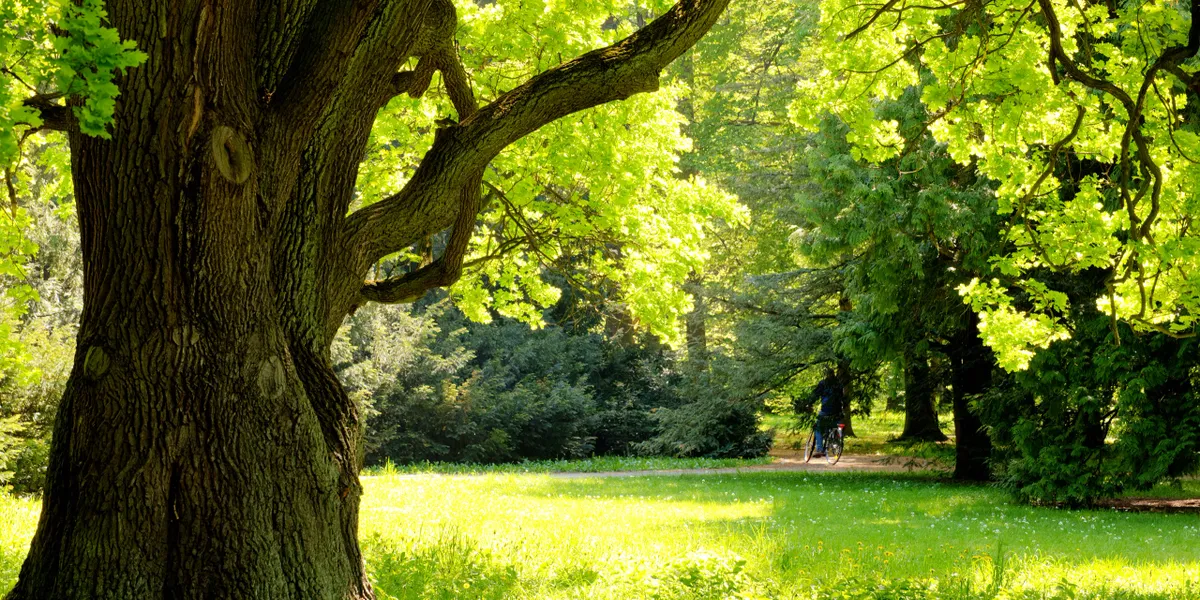
Mature Trees Are Worth Protecting
A large shade tree may have taken decades to reach its current size.
Losing that tree can dramatically change:
- Shade
- Privacy
- Curb appeal
- Property character
- Outdoor comfort
Professional pesticide and plant-health services are therefore not simply about eliminating insects.
They are about protecting valuable living assets.
When pest pressure is addressed alongside soil health, nutrition, pruning, and other tree-care needs, property owners can take a much more complete approach to preserving mature landscapes.
Responsible Pest Management Is About Balance
The goal of professional pesticide service should never be indiscriminate spraying.
It should be targeted management based on knowledge.
A responsible approach considers:
- The pest
- The host plant
- The level of damage
- The treatment area
- Environmental conditions
- Timing
- Long-term plant health
This allows pest management to become precise and purposeful.
It also reflects the broader philosophy behind the organic methods emphasized by Global Shade Tree Professionals.
Frequently Asked Questions
What pesticide services does Global Shade Tree Professionals provide?
We provide professional pest-management solutions that include organic pest control for landscape pests along with mosquito and tick control, integrated with our tree and shrub healthcare services.
Does every insect on my tree need pesticide treatment?
No. Many insects are harmless or beneficial. Professional identification helps determine whether an insect is actually damaging the plant.
What are signs that insects may be damaging a tree?
Chewed foliage, curling leaves, sticky residue, premature leaf loss, bark abnormalities, canopy thinning, and branch dieback can all justify closer evaluation.
Can shrubs receive pest treatments?
Yes. Professional shrub healthcare can address damaging pests while also evaluating disease, nutrition, pruning, and growing conditions.
Do you provide mosquito control?
Yes. Mosquito control can help reduce mosquito pressure around residential and commercial outdoor spaces.
Do you provide tick control?
Yes. Tick-management services can be particularly valuable around wooded boundaries, leaf litter, dense vegetation, and other favorable habitats.
Can pest control protect mature trees?
When damaging pests are identified and managed appropriately, pest-control services can be an important part of preserving valuable mature trees.
Does fertilization replace pesticide treatment?
No. Fertilization and pest management address different needs. Both may sometimes be part of a comprehensive plant-health program.
Are pesticide services useful for commercial properties?
Yes. Businesses, apartment communities, offices, and other commercial properties can benefit from professional pest management for trees, shrubs, mosquitoes, and ticks.
Why choose Global Shade Tree Professionals for pest management?
We combine pest management with comprehensive tree and shrub healthcare. Our services include organic pest control, mosquito and tick control, disease diagnosis, fertilization, tree care, and shrub care, allowing us to consider the entire landscape rather than treating individual symptoms in isolation.
Protect Your Landscape With Professional Pest Management
Effective pesticide service is not about spraying everything that moves. It begins with understanding the problem.
Knowing which pest is present, what it is affecting, why the plant may be vulnerable, and when treatment is appropriate allows property owners to make better decisions for their landscapes.
At Global Shade Tree Professionals, we bring pest management together with comprehensive tree and shrub healthcare to help protect both residential and commercial properties.
We proudly provide professional organic pest control, mosquito control, tick control, tree healthcare, shrub care, disease diagnosis, fertilization, and preventive landscape services throughout Andover, Sparta, Denville, Kinnelon, Blairstown, Morristown, Newton, Hackettstown, Randolph, Roxbury, Byram, Hopatcong, and surrounding Northern New Jersey communities.
Whether you are seeing unexplained leaf damage, insects on valuable shrubs, mosquitoes around your patio, ticks near wooded portions of your property, or simply want a proactive pest-management plan, our experienced team is ready to help.
Phone: 973-398-0682
Email: globalshadetree@aol.com
Contact Global Shade Tree Professionals today to schedule a professional property evaluation and discover a more targeted approach to pest management that protects the health, appearance, and enjoyment of your outdoor spaces.