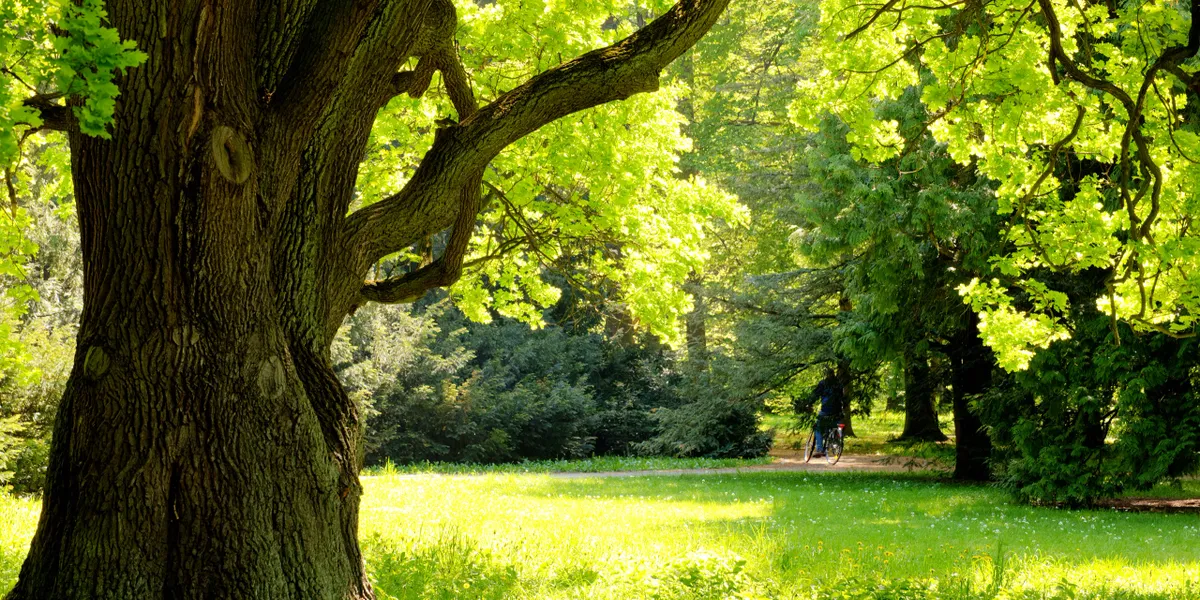

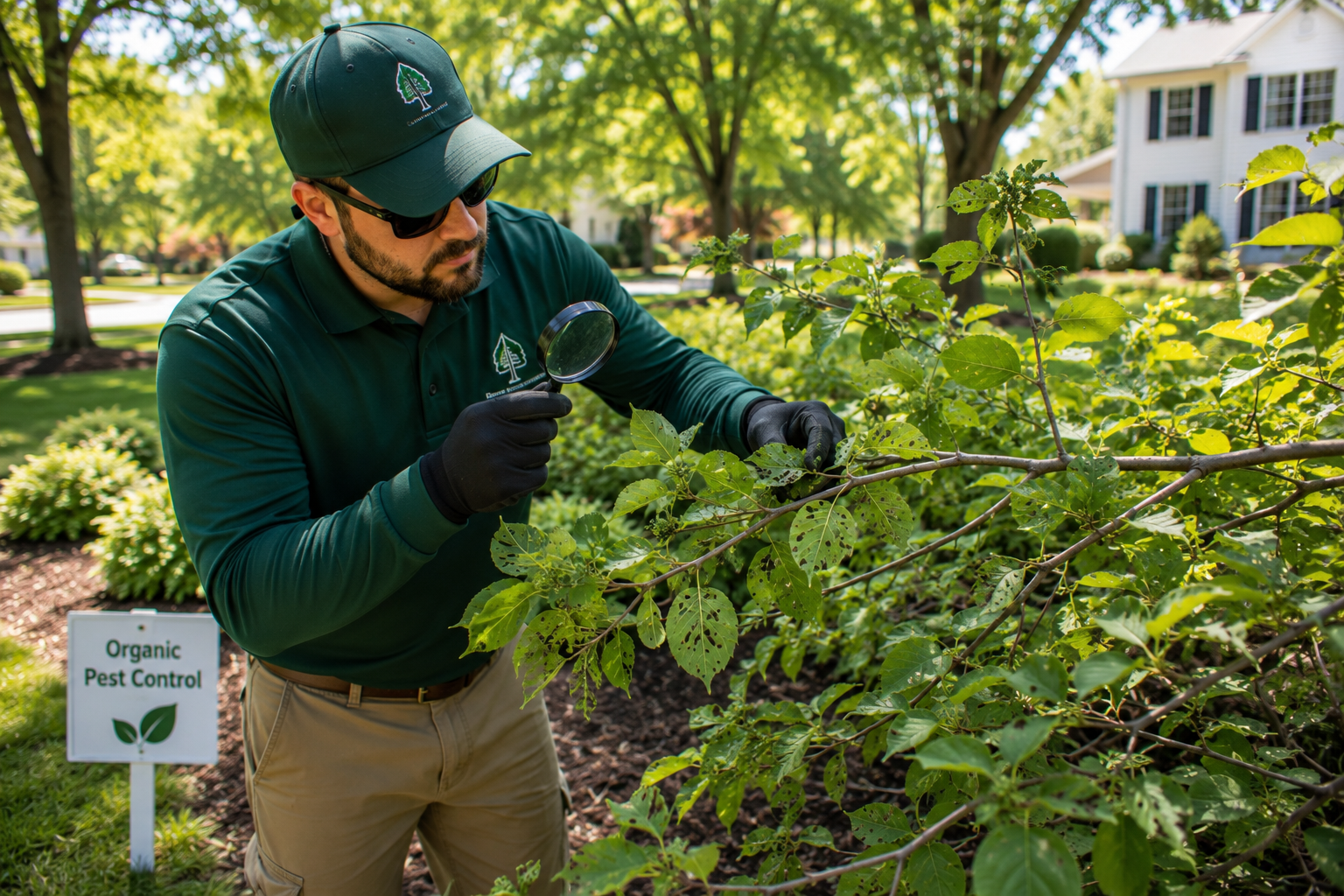
A mature tree can dominate a landscape for decades, providing shade, character, privacy, and natural beauty. Because of its size and strength, it is easy to assume that something as small as an insect could never seriously affect it. Unfortunately, some of the most significant tree health problems begin with signs so small that property owners barely notice them.
A few damaged leaves, tiny holes in bark, sticky residue on a shrub, thinning foliage, or an unusual patch of discoloration may appear harmless. In some cases, these changes are part of normal seasonal activity. In others, they may be early evidence of insects feeding on foliage, branches, bark, or other plant tissues.
Across Andover, Sparta, Denville, Kinnelon, Blairstown, Morristown, Newton, Hackettstown, Randolph, Roxbury, and surrounding Northern New Jersey communities, trees and shrubs are exposed to many different insects throughout the growing season. Most are simply part of a healthy ecosystem. The challenge is recognizing when insect activity begins threatening valuable landscape plants.
At Global Shade Tree Professionals, we approach pest management as part of comprehensive plant health care. Instead of assuming every insect needs treatment, we evaluate the pest, the plant, the extent of damage, and the environmental conditions contributing to the problem. Through professional monitoring and organic pest control, we help residential and commercial property owners protect trees and shrubs while supporting healthier landscapes.
Not Every Insect Is a Pest
One of the most important principles of responsible landscape care is recognizing that insects are a natural and necessary part of outdoor environments.
Healthy properties may contain:
- Pollinators
- Predatory insects
- Decomposers
- Butterflies
- Beetles
- Other beneficial species
Many insects play important ecological roles.
The presence of insects alone is therefore not a reason to treat a tree or shrub.
Professional pest management focuses on determining whether a particular insect is actually damaging the plant and whether intervention is necessary.
This targeted approach helps avoid unnecessary treatments while directing attention toward genuine problems.
Leaf Damage Is Often the First Clue
Leaves are frequently where property owners first notice unusual insect activity.
Warning signs may include:
- Irregular holes
- Chewed leaf margins
- Skeletonized foliage
- Curling leaves
- Distorted growth
- Unusual discoloration
- Premature leaf drop
A small amount of feeding does not necessarily threaten a mature tree.
Trees can often tolerate limited foliage damage without long-term consequences.
However, repeated or extensive defoliation may weaken a tree, particularly when it is already experiencing drought, root damage, disease, or other environmental stress.
Look Closely at New Growth
Young leaves and shoots can be particularly attractive to certain pests because the tissues are tender.
Property owners may notice:
- Curled new leaves
- Distorted shoots
- Sticky surfaces
- Clusters of tiny insects
- Stunted growth
These symptoms can sometimes appear quickly.
Professional identification matters because similar-looking damage may have very different causes.
Rather than treating based solely on appearance, we evaluate the plant carefully to determine what is actually happening.
Sticky Leaves May Indicate Insect Activity
A sticky substance on leaves, patios, vehicles, or surfaces beneath a tree can sometimes be associated with sap-feeding insects.
Property owners may initially assume the tree itself is leaking.
Closer inspection may reveal insect activity on leaves or branches above.
This is a good example of why observing the surrounding property can help identify tree problems.
Changes underneath a canopy can provide clues about what is occurring higher in the tree.
If unusual residue repeatedly appears beneath trees in Sparta, Denville, Morristown, or other Northern New Jersey communities, a professional inspection can help identify the source.
Bark Holes Deserve Attention
Some insects interact with trees beneath or within the bark.
Small holes in the trunk or branches can therefore deserve professional evaluation, particularly when they appear alongside other symptoms.
Property owners should also watch for:
- Unusual bark patterns
- Fine material near the trunk
- Bark splitting
- Branch dieback
- Thinning foliage
- Reduced vigor
A hole in bark does not automatically mean the tree has a serious infestation. Bark can be damaged for many reasons.
The overall pattern and condition of the tree must be considered.
Branch Dieback Can Be Connected to Pest Activity
When sections of a canopy begin dying, insects are one possible explanation.
But they are not the only explanation.
Branch dieback may also result from:
- Root stress
- Disease
- Drought
- Structural injury
- Poor soil
- Storm damage
Professional diagnosis is essential because treating insects will not correct a root problem, just as fertilization will not repair a severely damaged branch.
At Global Shade Tree Professionals, we look for the underlying cause rather than treating symptoms in isolation.
Stressed Trees May Be More Vulnerable
Plant health and pest management are closely connected.
A healthy tree has biological resources available to grow, maintain tissues, and respond to environmental pressures.
A stressed tree may have fewer resources available.
Stress can result from:
- Drought
- Soil compaction
- Root disturbance
- Construction
- Poor drainage
- Nutritional limitations
- Improper pruning
When insect activity appears, understanding these underlying conditions can be just as important as identifying the insect.
Improving the growing environment may become part of the long-term management strategy.
Healthy Soil Supports Natural Resilience
Many pest problems begin above ground, but soil health can influence how well trees tolerate them.
Roots depend on soil for moisture, nutrients, and oxygen.
When soil is heavily compacted or otherwise unfavorable, tree vigor can decline.
Depending on property conditions, professional plant health care may involve:
- Soil evaluation
- Root-zone management
- Appropriate fertilization
- Proper mulching
- Monitoring moisture conditions
Supporting healthy roots helps support a healthier canopy.
Organic Pest Control Focuses on the Whole Plant
At Global Shade Tree Professionals, organic pest control is not simply about reacting whenever an insect appears.
A thoughtful program begins with questions.
What pest is present?
How much damage is occurring?
Is the plant otherwise healthy?
Are environmental conditions contributing?
Is treatment actually necessary?
This approach allows pest management to become part of comprehensive tree and shrub care rather than an isolated service.
Shrubs Can Be Especially Vulnerable
Ornamental shrubs can experience substantial insect pressure because of their dense growth and tender foliage.
Possible symptoms include:
- Leaf curling
- Webbing
- Sticky foliage
- Chewed leaves
- Discoloration
- Branch dieback
- Reduced flowering
Because shrubs often grow close together, pest activity can sometimes become noticeable across multiple plants.
Routine professional shrub care creates opportunities to identify changes early.
Healthy, properly maintained shrubs also contribute to better airflow and a more balanced landscape.
Pruning May Help Plant Health
Professional pruning can sometimes support pest-management goals by removing appropriate dead or damaged material and improving plant structure.
For shrubs, thoughtful pruning may improve airflow and light penetration.
For trees, pruning may address dead branches or damaged canopy sections when appropriate.
However, pruning should never be viewed as a universal treatment for insect problems.
The type and amount of pruning should reflect the individual plant and its condition.
Fertilization Is Not an Insect Treatment
When a tree appears weak, property owners sometimes assume fertilizer will make the pest problem disappear.
Nutrition can support overall plant health when deficiencies or challenging soil conditions exist, but fertilizer does not automatically eliminate damaging insects.
In fact, every service should have a clear purpose.
A professional care plan may combine:
- Pest management
- Fertilization
- Soil improvement
- Pruning
but only when those services address identified needs.
Repeated Defoliation Can Become Serious
A healthy mature tree may tolerate a limited amount of leaf loss.
Repeated heavy defoliation is different.
Leaves are responsible for capturing sunlight and producing energy through photosynthesis. When large amounts of foliage are repeatedly lost, the tree must use stored resources to replace them.
Over time, this can contribute to decline.
Trees already under environmental stress may have an even harder time recovering.
This makes early monitoring especially valuable when noticeable foliage loss occurs year after year.
Commercial Landscapes Need Pest Monitoring Too
Tree and shrub health contributes directly to the appearance of commercial properties.
Insect damage around:
- Office entrances
- Apartment communities
- Retail centers
- Medical facilities
- Parking areas
- Outdoor seating
can quickly make landscaping appear neglected.
Commercial property managers throughout Morristown, Randolph, Roxbury, Newton, Hackettstown, Denville, and surrounding areas can benefit from incorporating plant health monitoring into routine landscape maintenance.
Early detection may also help protect established plantings that would be expensive and time-consuming to replace.
Pest Damage Can Affect Curb Appeal
Even when an insect problem does not immediately threaten the survival of a tree or shrub, extensive leaf damage can reduce landscape appearance.
Thin foliage, damaged leaves, and declining shrubs can make an otherwise attractive property appear unhealthy.
For homeowners preparing to sell or businesses focused on maintaining professional appearances, plant health contributes significantly to overall curb appeal.
Protecting trees and shrubs helps preserve the established character of the property.
Mosquitoes and Ticks Require a Different Strategy
Mosquito and tick management should not be confused with tree and shrub pest management.
While plant-damaging insects directly affect landscape health, mosquitoes and ticks primarily influence how people and pets use outdoor environments.
Properties with:
- Wooded boundaries
- Dense vegetation
- Shaded areas
- Patios
- Play spaces
- Outdoor seating
may benefit from professional mosquito and tick control as part of a broader outdoor property-care strategy.
Managing plant health and outdoor pests together can create landscapes that are both healthier and more enjoyable.
Early Detection Creates More Options
One of the greatest advantages of routine professional tree care is the opportunity to identify problems while they are still developing.
Property owners should consider scheduling an evaluation when they notice:
- Unusual leaf damage
- Rapid canopy thinning
- Bark holes
- Sticky residue
- Extensive webbing
- Repeated defoliation
- Progressive branch dieback
- Multiple shrubs showing similar symptoms
Waiting until an entire canopy is visibly declining can limit management options.
Early evaluation provides more information and more time to respond.
Preventive Tree Care Is About Patterns
Individual leaves fall. Small branches die. Insects appear.
These events are normal parts of living landscapes.
What matters is recognizing patterns.
Is damage increasing?
Is the same problem returning every year?
Are several plants affected?
Is canopy density changing?
Has growth noticeably slowed?
Professional monitoring helps separate ordinary seasonal changes from developing health concerns.
Tree Removal Is Sometimes the Final Option
Most pest-management efforts focus on preserving trees, but severely compromised trees may eventually reach a point where removal becomes necessary.
If insect damage occurs alongside extensive structural decline, severe disease, or other irreversible problems, professional tree removal may become the safer and more practical option.
The decision should be based on the complete condition of the tree, not simply the presence of insects.
Preserving a tree is valuable when preservation is realistic and appropriate.
Frequently Asked Questions
Does seeing insects on a tree mean it needs treatment?
No. Many insects are harmless or beneficial. Professional identification helps determine whether treatment is necessary.
What are common signs of insect damage on trees?
Chewed leaves, distorted foliage, sticky residue, bark abnormalities, premature leaf drop, canopy thinning, and branch dieback can all warrant closer inspection.
Can insects kill mature trees?
Certain damaging pests can contribute to serious decline, particularly when trees are already stressed or infestations become severe.
Are holes in tree bark always caused by insects?
No. Bark holes and damage can have several causes. The pattern and overall tree condition should be professionally evaluated.
Can fertilizer eliminate tree insects?
No. Fertilization may support overall tree health when nutritional needs exist, but it is not a substitute for appropriate pest management.
Does pruning help with pest problems?
Appropriate pruning may remove dead or damaged material and improve plant structure, but pruning recommendations depend on the pest and condition of the plant.
Can shrubs suffer from the same pests as trees?
Some pests affect multiple types of plants, while others prefer specific hosts. Accurate identification is important.
Why does tree stress matter when dealing with insects?
Stressed trees may have reduced ability to tolerate or respond to pest pressure, making soil, roots, moisture, and overall plant health important considerations.
Is organic pest control suitable for commercial landscapes?
Yes. Professional organic pest-management programs can help protect trees and shrubs around offices, apartment communities, retail properties, and other commercial landscapes.
Why choose Global Shade Tree Professionals?
We provide comprehensive tree and landscape services throughout Northern New Jersey, including organic pest control, tree evaluations, pruning, fertilization, shrub care, tree removal, mosquito control, and tick control. Our approach focuses on accurate identification and long-term plant health rather than treating every landscape problem the same way.
Catch Small Pest Problems Before They Become Big Landscape Problems
Tiny insects can create surprisingly large problems, but the presence of a pest is only part of the story. Tree and shrub health depends on soil, roots, moisture, nutrition, structure, environmental conditions, and many other factors working together.
At Global Shade Tree Professionals, we evaluate the complete landscape before recommending a solution.
We proudly provide professional organic pest control, tree care, tree pruning, tree removal, fertilization, shrub care, mosquito control, tick control, and preventive landscape services throughout Andover, Sparta, Denville, Kinnelon, Blairstown, Morristown, Newton, Hackettstown, Randolph, Roxbury, and surrounding Northern New Jersey communities.
Whether you have noticed damaged leaves, unusual insects, declining branches, or simply want to protect valuable trees before problems develop, our experienced team can help determine the appropriate next step.
Phone: 973-398-0682
Email: globalshadetree@aol.com
Contact Global Shade Tree Professionals today to schedule a professional tree and shrub evaluation and protect your landscape with proactive, knowledgeable care designed for long-term health.