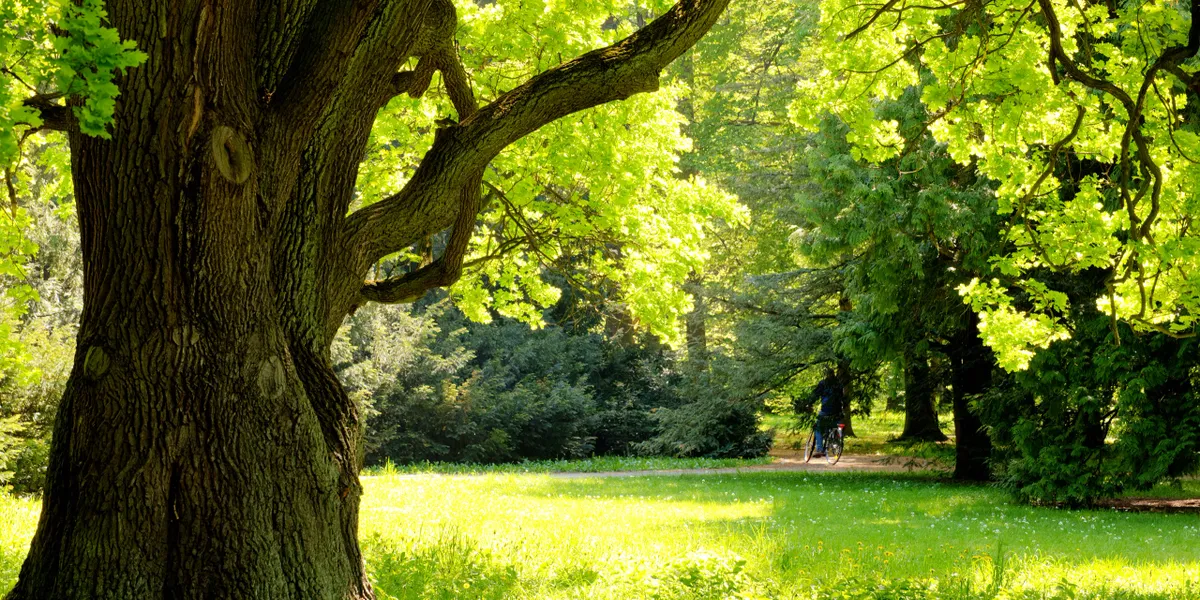

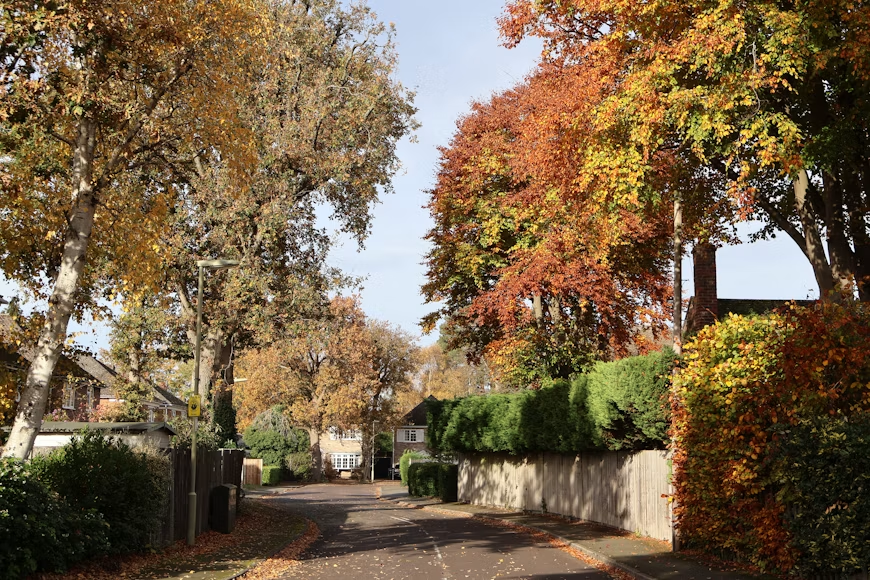
A mature tree can spend decades becoming one of the most valuable features on a residential or commercial property. It provides shade, adds character to the landscape, creates privacy, supports outdoor living areas, and can completely change the appearance of a home or business.
Unfortunately, trees can also develop health problems slowly and quietly.
A branch may begin thinning. Leaves may appear smaller than they did the previous year. Portions of the canopy may lose color. Bark may crack, insects may appear, or the tree may simply stop looking as full and vigorous as it once did.
These changes are easy to overlook.
For property owners in Andover, Sparta, Denville, Kinnelon, Blairstown, Morristown, and surrounding Northern New Jersey communities, preventive tree care provides an opportunity to identify problems while there may still be several options available.
At Global Shade Tree Professionals, we believe good tree care should not begin only when a tree becomes an emergency. Tree healthcare works best when the entire tree, its growing environment, and the conditions surrounding the property are considered together.
Tree Problems Rarely Begin Overnight
When a homeowner suddenly notices that a tree looks unhealthy, the underlying problem may have been developing for months or even years.
Trees are remarkably resilient. They can continue producing leaves and new growth while dealing with environmental stress, damaged roots, nutrient problems, insects, disease, or other challenges.
Eventually, however, that stress may become visible.
Common warning signs include:
- Thinning areas within the canopy
- Dead or dying branches
- Smaller leaves than normal
- Premature leaf drop
- Yellowing or unusual leaf color
- Cracks or damaged bark
- Fungal growth around the trunk or root area
- Insect holes or unusual insect activity
- Reduced annual growth
- Branch tips dying back
- Sections of the tree failing to leaf out normally
One symptom alone does not always indicate a serious problem. The important question is why the change is happening.
That is where professional tree healthcare becomes valuable.
Preventive Tree Care Starts With Observation
Homeowners often search for “tree care near me” after something obvious happens: a limb falls, leaves suddenly turn brown, or an insect infestation becomes difficult to ignore.
A better approach is to observe trees throughout the year.
Changes are often easier to recognize when the same property is monitored consistently.
For example, a mature tree in Sparta, NJ that has historically produced a dense canopy may begin looking noticeably thinner. A shade tree in Morristown may develop dead branches near the top. A tree along a wooded property in Blairstown may show unusual bark changes or insect activity.
These observations provide useful clues.
Professional inspection can then consider whether the symptoms are related to pests, disease, soil conditions, moisture, root damage, environmental stress, or another factor.
Tree Health Begins Below the Ground
People naturally focus on trunks, branches, and leaves because those are the visible parts of a tree.
Much of the tree’s health, however, depends on what is happening underground.
Roots need adequate:
- Moisture
- Oxygen
- Soil structure
- Nutrients
- Growing space
Residential landscapes are very different from natural forests.
Roots may have to compete with lawns and ornamental plants. Soil may become compacted by vehicles, construction equipment, foot traffic, or repeated landscape activity. Changes to drainage can create excessively wet or dry conditions.
Even something that happened years ago can affect a tree later.
Construction near a mature tree, for example, can disturb portions of the root system. The tree may continue appearing healthy initially before symptoms gradually become noticeable.
This is particularly important on established properties throughout Kinnelon, Denville, Andover, and Sparta, where mature trees may be growing close to homes, driveways, patios, retaining walls, and other improvements.
Fertilization Should Be Based on What a Tree Actually Needs
Fertilization can be an important part of professional tree healthcare, but fertilizer is not a universal solution.
A tree that looks weak does not automatically have a nutrient deficiency.
Similar symptoms can result from:
- Root stress
- Poor drainage
- Drought
- Soil compaction
- Insect activity
- Disease
- Physical damage
That is why a professional evaluation should come before treatment.
When added nutrition is appropriate, a tree and shrub fertilization program can help support root development, healthy foliage, and overall plant vigor.
This can be particularly helpful in landscaped environments where natural nutrient cycling has been interrupted.
In a forest, leaves and other organic materials remain on the ground and gradually decompose. In residential landscapes, those materials are often removed each year.
Professional fertilization gives property owners another way to support valuable trees when soil and plant conditions indicate that additional nutrition may be beneficial.
Insect Problems Are Easier to Address When Detected Early
Northern New Jersey landscapes support countless insects, and not every insect found on a tree is harmful.
Professional pest management begins with identification.
A property owner may notice:
- Holes in leaves
- Sticky material on foliage
- Unusual bumps along branches
- Webbing
- Curling leaves
- Sawdust-like material around the trunk
- Sections of foliage disappearing
- Visible insects clustering on branches
The next step should not automatically be treatment.
The first step should be determining what is present and whether it is actually threatening the plant.
At Global Shade Tree Professionals, we favor a thoughtful approach to organic pest control and plant healthcare. Treating the correct problem at the appropriate time is far more useful than assuming every insect requires the same response.
Tree Diseases Can Look Like Nutrient or Insect Problems
Tree disease can be difficult for homeowners to identify because many symptoms overlap.
Leaf discoloration might suggest nutrition, disease, root stress, or environmental conditions.
Branch dieback might be caused by disease, but it could also involve insects or root problems.
That is why disease diagnosis should examine the entire tree rather than focusing on one symptom.
A professional assessment may consider:
- Tree species
- Location of symptoms
- Pattern of decline
- Soil conditions
- Root environment
- Recent weather
- Insect activity
- History of the property
Properties in Andover, Sparta, Denville, Kinnelon, Blairstown, and Morristown contain many different species of shade and ornamental trees. Each may respond differently to environmental conditions and health problems.
Accurate diagnosis creates a much stronger foundation for treatment.
Proper Pruning Can Be Part of Preventive Tree Care
Pruning is often viewed primarily as a way to improve appearance.
While professional pruning can certainly make a tree look better, the larger purpose may include improving structure and removing damaged, dead, rubbing, or problematic branches.
Depending on the tree, pruning may help improve:
- Branch structure
- Clearance
- Canopy balance
- Air movement
- Removal of damaged wood
- Overall appearance
Pruning should always take the tree’s species, age, health, structure, and location into account.
A large tree beside a house in Denville has different considerations from a tree growing along a wooded property edge in Blairstown.
Similarly, a tree beside a commercial parking lot in Morristown may require a different maintenance strategy from a backyard shade tree in Sparta.
Good tree care is property-specific.
Preventive Care Can Help Property Owners Prepare for Storms
Northern New Jersey property owners know that trees can be tested by wind, heavy rain, snow, ice, and changing weather conditions.
No tree can be guaranteed against storm damage.
However, identifying obvious concerns before severe weather can allow property owners to make better decisions.
Conditions worth evaluating may include:
- Large dead branches
- Hanging or broken limbs
- Significant trunk damage
- Cracked branch unions
- Changes in the tree’s lean
- Root-area movement
- Major canopy dieback
Trees growing near homes, driveways, garages, walkways, outdoor living areas, parking lots, or other frequently used spaces deserve particular attention.
Waiting until a storm is approaching is not the best time to discover that a large tree has been declining for several seasons.
Residential Tree Care Protects Long-Term Landscape Value
For many homeowners, mature trees are irreplaceable landscape features.
A large shade tree cannot simply be replaced with another tree of identical size the following weekend.
Young replacement trees may require decades to create the same canopy and visual impact.
That makes preservation worthwhile whenever a tree can reasonably be maintained.
Homeowners searching for tree care companies near Sparta, NJ, best tree care companies near me, or tree service near me should therefore look beyond emergency work.
Professional tree healthcare may involve:
- Tree inspections
- Disease diagnosis
- Organic pest control
- Fertilization
- Shrub healthcare
- Ongoing monitoring
- Preventive maintenance
The objective is to understand what is happening before the tree reaches the point where options become limited.
Commercial Trees Need Preventive Care Too
Preventive tree healthcare is equally important for commercial properties.
Trees may surround:
- Office buildings
- Apartment communities
- Retail properties
- Parking areas
- Walkways
- Outdoor employee areas
- Customer entrances
A tree problem on a commercial property can affect more than appearance.
Maintenance may become more difficult to schedule if a problem suddenly requires urgent attention.
Businesses and property managers in Morristown, Denville, Sparta, Andover, Kinnelon, and Blairstown can benefit from identifying tree and shrub concerns early enough to plan work instead of constantly reacting to unexpected problems.
Tree Care and Shrub Care Should Work Together
A healthy property is an interconnected system.
Trees affect shade and moisture conditions around shrubs. Shrubs influence airflow and areas where insects may rest. Soil conditions affect both trees and ornamental plants.
Mosquito and tick activity can also be influenced by vegetation and property conditions.
For that reason, professional landscape healthcare can be more effective when the entire property is considered.
Tree healthcare, shrub care, fertilization, organic pest control, disease diagnosis, and mosquito and tick management can all contribute to the same overall goal: maintaining a healthier and more usable landscape.
When Should a Property Owner Schedule a Tree Evaluation?
There does not need to be an emergency.
A professional evaluation may be worthwhile when:
- A tree looks different from previous years
- Branches are dying
- Leaves are becoming smaller or discolored
- Insects are appearing repeatedly
- Construction occurred near the root area
- Mature trees have not been evaluated for several years
- The property contains valuable older trees
- A homeowner wants to establish a preventive care plan
Early evaluation does not automatically mean expensive treatment.
Sometimes the recommendation may simply involve monitoring the tree.
In other cases, addressing a developing problem early may provide more options than waiting until decline becomes severe.
Preventive Tree Care Is About Staying Ahead of the Problem
The best time to think about tree health is before a tree becomes an emergency.
For property owners throughout Andover, Sparta, Denville, Kinnelon, Blairstown, Morristown, and surrounding Northern New Jersey communities, preventive tree care offers a practical way to protect mature landscaping, identify developing problems, and plan maintenance more confidently.
At Global Shade Tree Professionals, we believe every tree deserves to be evaluated based on its individual condition and the environment in which it is growing.
Trees are long-term investments in the landscape. Caring for them proactively can help keep those investments healthier for years to come.
Schedule Professional Tree Care With Global Shade Tree Professionals
Trees do not need to be visibly dying before professional attention can be valuable.
If a tree is thinning, developing dead branches, showing unusual leaf color, experiencing pest activity, or simply has not received a professional evaluation in years, Global Shade Tree Professionals can help determine what the tree may need.
Our team provides professional tree and shrub healthcare, fertilization, disease diagnosis, organic pest management, and related property-care services for residential and commercial landscapes.
Property owners in Andover, Sparta, Denville, Kinnelon, Blairstown, Morristown, and surrounding Northern New Jersey communities can contact Global Shade Tree Professionals today to schedule an evaluation and take a proactive approach to healthier trees, healthier shrubs, and a stronger landscape.