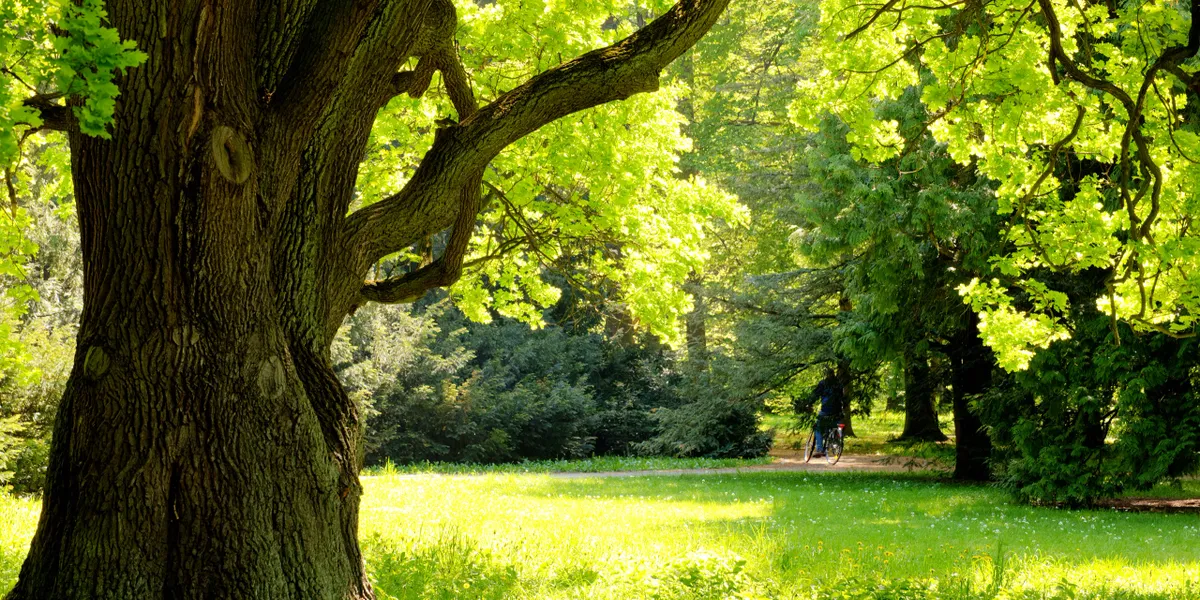

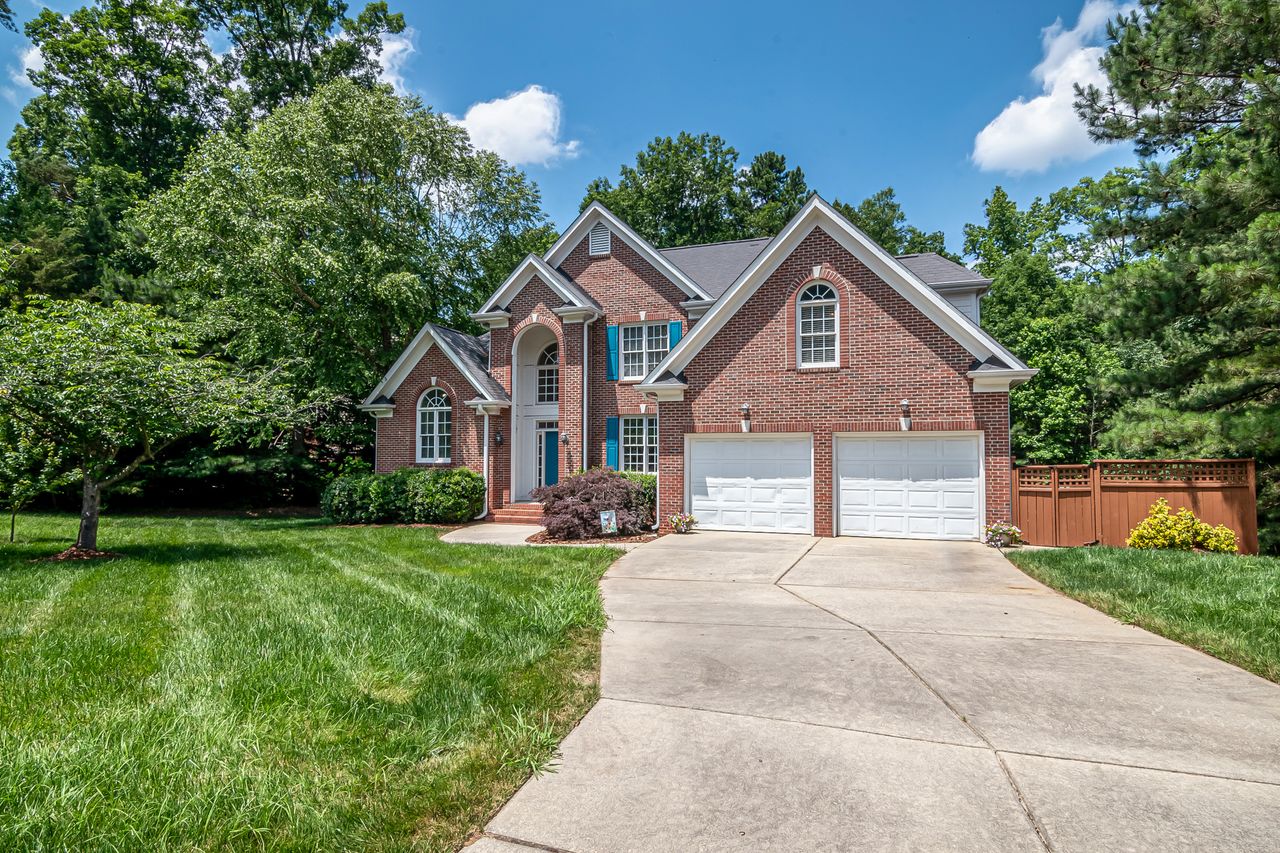
A wooded backyard can be one of the most attractive features of a Northern New Jersey property.
Mature trees create privacy. Natural areas provide shade. Wooded borders can make a residential property feel larger, quieter, and more connected to the surrounding landscape.
However, the same transition between a maintained yard and natural woodland can also create conditions where ticks are more likely to be encountered.
For homeowners in Andover, Sparta, Denville, Kinnelon, Blairstown, Morristown, and surrounding Northern New Jersey communities, effective tick control begins with understanding where ticks are most likely to live and where family members and pets are most likely to come into contact with them.
At Global Shade Tree Professionals, we believe tick management should be built around the individual property rather than treating every yard exactly the same way.
Why Wooded Edges Deserve Special Attention
Ticks do not normally spread evenly across an entire property.
A bright, open lawn can have very different conditions from the shaded vegetation only a few feet away.
The transition between lawn and woods may contain:
- Fallen leaves
- Tall grasses
- Brush
- Low-growing vegetation
- Dense shrubs
- Organic debris
- Shaded soil
- Wildlife travel routes
These areas can provide protection from the hot, dry conditions that ticks generally avoid.
This is why someone searching for tick control near me may benefit from looking beyond the open lawn and focusing on the borders of the property.
On many properties in Sparta, Andover, Kinnelon, and Blairstown, the lawn-to-woods transition is one of the most important areas to evaluate.
Leaf Litter Can Create Tick-Friendly Conditions
Autumn leaves are a natural and valuable part of wooded ecosystems.
However, thick accumulations of leaf litter around frequently used portions of a residential property can create sheltered conditions close to the ground.
That does not mean every leaf must be removed from every wooded area.
Instead, homeowners can focus on locations where people and pets regularly spend time.
These may include:
- Patio edges
- Walkways
- Play areas
- Dog runs
- Garden paths
- Lawn borders
- Fire-pit areas
- Outdoor seating
- Areas beside decks
Clearing excessive leaf buildup from these high-use zones can help create a cleaner separation between recreational areas and natural vegetation.
For properties with extensive woods in Blairstown or Andover, concentrating on the areas closest to everyday activity may be more practical than trying to dramatically change the entire property.
Tall Grass and Brush Can Increase Exposure Opportunities
The edge of a lawn is often where regular mowing stops.
Grass becomes taller. Shrubs grow more freely. Brush becomes thicker.
These transition zones deserve attention because family members, children, pets, landscapers, and gardeners may regularly pass through them.
Keeping grass maintained and managing unnecessary brush around frequently used sections of the yard can make the landscape easier to monitor.
This is particularly useful around:
- Mailboxes
- Walking paths
- Driveways
- Playsets
- Pool areas
- Outdoor entertaining spaces
- Pet areas
A homeowner does not necessarily need to turn a wooded property into an open lawn.
The objective is to create better-defined zones between regularly used spaces and denser vegetation.
Wildlife Can Carry Ticks Through a Property
Wildlife is another important part of the tick-control picture.
Deer, rodents, birds, and other animals naturally move through Northern New Jersey landscapes.
A homeowner may rarely see animals during the day and still have regular wildlife movement across the property.
Wooded corridors, stone walls, brush lines, and natural property boundaries can all provide travel routes.
This matters because ticks can be transported by animal hosts from one location to another.
For homes in Kinnelon, Sparta, and Blairstown, where wooded lots and natural corridors are common, tick management should consider more than just the visible lawn.
Understanding how the surrounding landscape connects to neighboring woods and vegetation can help identify areas deserving greater attention.
Shrubs Can Create Hidden Tick Zones
Shrubs are an important part of attractive residential landscaping.
They provide screening, structure, seasonal color, and privacy.
When shrub beds become excessively dense, however, the soil beneath them may remain shaded and protected.
Old leaves can accumulate beneath branches. Ground-level vegetation can become difficult to inspect. Branches may extend all the way to the lawn.
Professional shrub care can help maintain healthier, more manageable plantings.
Appropriate maintenance may improve:
- Air movement
- Visibility
- Access beneath shrubs
- Plant structure
- Separation from heavily used lawn areas
This shows why tick control and shrub care can work together as part of a broader property-health strategy.
Can a Yard Actually Be Treated for Ticks?
One of the most common online questions is:
Can you treat a yard for ticks?
Yes. Professional yard treatment can be one component of a comprehensive tick-management program.
The key word is component.
Outdoor landscapes are open environments.
Wildlife can continue moving through the property. Vegetation continues growing. Leaves return each year. Weather changes moisture conditions. Neighboring properties can influence pest pressure.
For those reasons, tick control should generally be approached as ongoing management rather than expecting one application to permanently eliminate every tick.
At Global Shade Tree Professionals, we look at the property itself and determine where targeted attention makes the most sense.
Where Should Tick Control Be Focused?
Professional treatment does not necessarily need to concentrate equally on every square foot.
A better strategy considers where tick habitat overlaps with human activity.
Priority zones may include:
- Wooded lawn edges
- Shaded shrub borders
- Stone walls
- Paths through vegetation
- Perimeters of play areas
- Areas frequently used by pets
- Landscape beds near patios
- Transitions between maintained and natural areas
A large section of deep woodland that nobody enters may be less important than a narrow brushy border beside a patio used every evening.
Property use matters.
Tick Control for Families With Children
Families often become especially concerned about ticks when children regularly play outdoors.
Playsets, swings, trampolines, lawns, and backyard activity areas are frequently located close to property boundaries.
Where possible, frequently used recreational areas benefit from clear separation from dense brush and wooded vegetation.
Homeowners in Denville, Morristown, Sparta, and surrounding communities can examine where children spend the most time and determine whether those areas border vegetation that could be better managed.
The goal is not to eliminate outdoor play.
It is to create a yard where play areas are thoughtfully positioned and maintained.
Tick Control for Homes With Dogs
Dogs can enter areas people might normally avoid.
They explore shrubs, tall grass, wooded borders, trails, and piles of leaves.
Because of this, pet-use areas deserve particular attention during a tick-control evaluation.
Homeowners should also continue using veterinarian-recommended tick prevention for pets and regularly check animals after they have been outdoors. Current CDC guidance specifically recommends daily tick checks for pets that spend time outside.
Landscape management and veterinary prevention serve different purposes and can work together.
What Will Kill Ticks Immediately?
Another frequent search is:
What will kill ticks immediately?
The answer depends on whether someone is asking about a tick attached to a person, a tick found on a pet, or tick populations in the yard.
For attached ticks, prompt and proper removal is important. CDC guidance recommends removing an attached tick as soon as possible rather than delaying removal.
For the landscape, the better question is often:
How can tick populations and exposure opportunities around the yard be reduced?
Professional tick management focuses on reducing activity in targeted areas rather than promising that every tick on an open property will permanently disappear.
Tick Spray, Tick Tubes, and Other Approaches
Homeowners frequently search terms such as:
- Tick control spray
- Tick control tubes
- Tick control systems
- Best tick control
- Organic tick control
- Tick treatment near me
Different approaches target ticks in different ways.
No single option should automatically be considered the right choice for every property.
A large wooded lot in Blairstown has very different characteristics from a smaller landscaped yard in Morristown.
Professional evaluation can help determine which areas should be prioritized and what type of program makes sense for the specific landscape.
Tick Control and Mosquito Control Are Not Exactly the Same
Ticks and mosquitoes are often discussed together, but their behavior is different.
Mosquitoes fly and often reproduce around standing water.
Ticks are much more closely associated with vegetation, leaf litter, ground-level habitat, and animal hosts.
That means a property can have completely different mosquito and tick problem areas.
For example, a shaded drainage area might contribute to mosquito pressure while a wooded lawn edge presents greater tick exposure.
Effective pest management recognizes those differences.
Why Property Maintenance Matters
Homeowners can support professional tick-control efforts through routine property maintenance.
Useful practices include:
- Keeping frequently used lawn areas mowed
- Managing tall grass around borders
- Removing excessive leaf litter near activity zones
- Maintaining shrubs
- Keeping recreation areas separated from dense vegetation where practical
- Keeping wood and yard materials organized
- Monitoring areas used by pets
The CDC similarly recommends measures such as clearing tall grass and brush, removing leaf litter, mowing lawns, and creating barriers between lawns and wooded areas.
Small landscape changes can complement professional treatment.
Tick Control for Commercial Properties
Tick management is not limited to residential yards.
Commercial properties can also contain areas where employees, tenants, customers, or visitors come into contact with vegetation.
Examples include:
- Apartment communities
- Office campuses
- Walking trails
- Outdoor break areas
- Landscaped common areas
- Recreational properties
- Wooded property boundaries
Commercial properties in Morristown, Denville, Sparta, and nearby Northern New Jersey communities can benefit from evaluating where people regularly move between maintained landscapes and natural vegetation.
Why Local Property Conditions Matter
No two Northern New Jersey properties are identical.
A wooded home in Kinnelon may have extensive shaded borders.
A property in Sparta may combine open lawn with surrounding woods.
A home in Andover or Blairstown may sit beside a large natural area.
A landscaped property in Denville or Morristown may have smaller but densely planted garden beds.
That is why tick management should not rely on a one-size-fits-all plan.
The best approach begins by understanding the landscape.
Frequently Asked Questions About Tick Control
1. Can a residential yard be professionally treated for ticks?
Yes. Professional treatment can help reduce tick populations in targeted areas of a residential property.
2. Where are ticks most commonly found in a yard?
Ticks are commonly associated with wooded, brushy, grassy, and leaf-covered areas rather than the center of a sunny, well-maintained lawn.
3. Does removing leaves help with tick control?
Removing excessive leaf litter from frequently used lawn edges and recreational areas can reduce favorable tick habitat.
4. Should every wooded area be cleared?
No. Tick management does not require eliminating valuable natural woodland. The focus can be placed on high-use areas and lawn-to-woods transitions.
5. Can ticks be found in a maintained backyard?
Yes. People can encounter ticks even around their own yards, especially where lawns meet brush, woods, or dense vegetation.
6. Are dogs more likely to encounter ticks?
Dogs frequently explore vegetation and wooded areas, which can increase opportunities for tick exposure.
7. Is one tick treatment enough forever?
Outdoor properties continually change, so ongoing management may be necessary depending on landscape conditions and pest pressure.
8. Are tick control and mosquito control the same service?
No. The pests behave differently and often require different treatment priorities within the landscape.
9. Can shrub maintenance help with tick management?
Maintaining overly dense vegetation and removing excessive debris around frequently used areas can support a broader tick-control strategy.
10. Who provides professional tick control in Northern New Jersey?
Global Shade Tree Professionals provides tick and mosquito control together with tree healthcare, shrub care, fertilization, disease diagnosis, and organic pest-management services throughout Andover, Sparta, Denville, Kinnelon, Blairstown, Morristown, and surrounding Northern New Jersey communities. The company currently describes its pest-control services as part of a broader tree and shrub healthcare program.
Professional Tick Control Starts With Understanding the Property
A wooded landscape does not have to stop a family from enjoying its backyard.
The key is understanding which parts of the property are most likely to support tick activity and where people and pets are most likely to encounter those areas.
At Global Shade Tree Professionals, we take a property-focused approach to outdoor pest management. Our work integrates tick control with the broader health and condition of trees, shrubs, landscape edges, and outdoor living areas.
For homeowners and commercial property managers in Andover, Sparta, Denville, Kinnelon, Blairstown, Morristown, and surrounding Northern New Jersey communities, contact Global Shade Tree Professionals today to schedule a professional tick-control evaluation and build a targeted plan for a more comfortable, better-managed outdoor property.