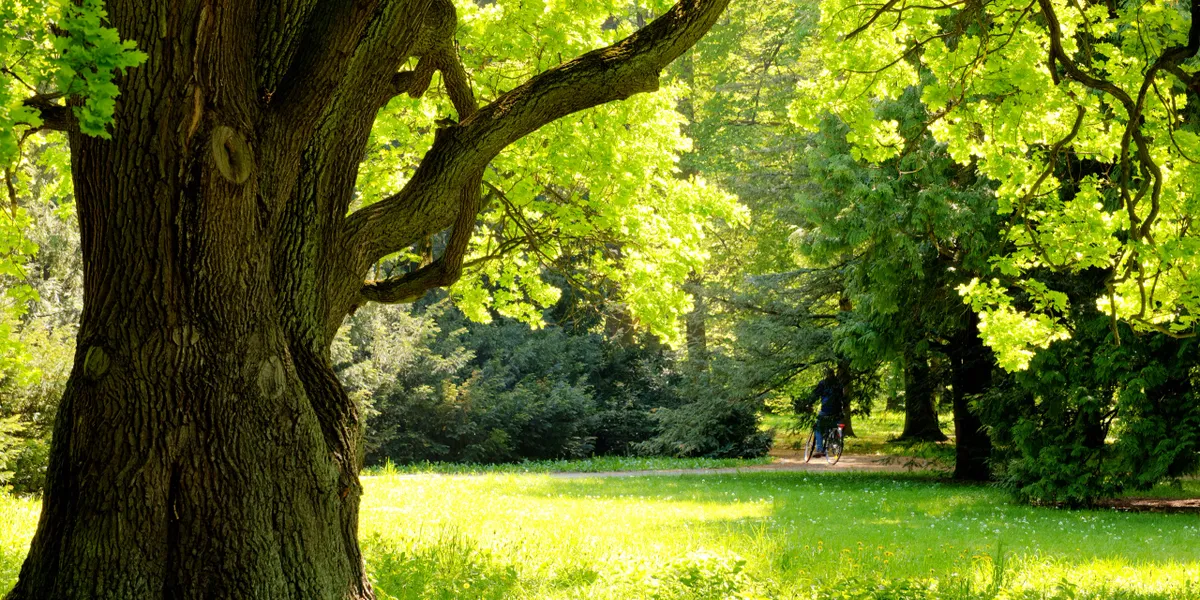

A mature tree can remain one of the most impressive features of a property for decades. Its canopy provides shade, improves curb appeal, adds character to the landscape, and creates a sense of permanence that newly planted trees simply cannot replace. But even a tree that looks healthy from a distance can contain dead, weakened, or declining branches that deserve professional attention.
Dead branches are easy to underestimate. Property owners may notice a branch without leaves and assume it can remain in place until the next scheduled landscaping project. In reality, deadwood can become increasingly brittle over time, creating unnecessary risks for homes, vehicles, walkways, parking areas, and people below.
Across Andover, Sparta, Denville, Kinnelon, Blairstown, Morristown, Newton, Hackettstown, Randolph, Roxbury, and surrounding Northern New Jersey communities, mature trees experience changing weather, storms, insects, disease, drought stress, soil problems, and natural aging. Any of these factors can contribute to branch decline.
At Global Shade Tree Professionals, we believe dead and dying branches should be viewed as valuable warning signs. They can reveal much more about a tree than what is visible from the ground. By identifying the cause of branch decline and addressing problems early, we can help property owners protect their landscapes while reducing the likelihood of larger and more expensive issues.
Why Do Tree Branches Die?
Branches can decline for many different reasons.
Sometimes, the cause is relatively simple. A shaded interior branch may naturally die because it no longer receives enough sunlight to justify the tree’s energy investment.
In other cases, deadwood can indicate a larger problem involving:
- Insect activity
- Tree disease
- Root damage
- Soil compaction
- Drought stress
- Storm injuries
- Structural damage
- Nutrient deficiencies
- Natural aging
The important question is not simply whether a branch is dead. Property owners should also understand why it died.
When multiple branches begin declining throughout a canopy, professional evaluation becomes particularly important.
Dead Branches Become Increasingly Brittle
Living wood contains moisture and flexible tissues that help branches respond to movement.
Once a branch dies, it gradually loses moisture and becomes more brittle.
Over time, wind, rain, snow, ice, and normal movement within the canopy can cause weakened deadwood to break.
A branch that remained attached throughout the summer may fail during an autumn storm or after heavy winter weather.
This is one reason routine professional inspections are valuable even when a tree appears relatively stable.
The Location of Deadwood Matters
A small dead branch in an isolated area of a large property may represent a relatively minor concern.
The same branch positioned directly over a front entrance deserves more immediate attention.
Professional tree evaluations consider what arboriculture professionals commonly refer to as the potential target area.
Dead or weakened branches become more concerning when located above:
- Homes
- Garages
- Driveways
- Sidewalks
- Patios
- Children’s play areas
- Parking spaces
- Building entrances
- Outdoor seating areas
Properties in established communities such as Sparta, Denville, Morristown, and Kinnelon may contain large mature trees growing relatively close to structures and heavily used outdoor areas.
Regular inspections help property owners understand where maintenance should be prioritized.
Deadwood Can Be a Symptom of Root Stress
Sometimes, the problem begins far away from the branch itself.
A tree with damaged or unhealthy roots may struggle to supply sufficient moisture and nutrients throughout its canopy. As stress increases, individual branches may begin declining.
Possible causes of root stress include:
- Construction activity
- Excavation
- Soil compaction
- Poor drainage
- Drought
- Excessive moisture
- Grade changes
When branch dieback is connected to root problems, simply removing the deadwood does not address the complete issue.
At Global Shade Tree Professionals, we look at the entire tree and surrounding landscape when evaluating decline.
Insects Can Contribute to Branch Dieback
Certain insects damage foliage, bark, branches, or vascular tissues.
Early symptoms may be subtle.
Property owners might notice:
- Small areas of thinning foliage
- Discolored leaves
- Unusual holes in bark
- Fine material around the trunk
- Premature leaf drop
- Individual dying branches
As pest activity progresses, larger sections of the canopy may become affected.
Professional identification is important because different insects require different management strategies.
Our approach to organic pest control focuses on understanding the pest, the health of the tree, and the surrounding growing conditions rather than assuming every insect requires the same treatment.
Disease Can Also Cause Progressive Dieback
Fungal and other tree diseases can affect branches gradually.
Symptoms may include:
- Cankers
- Bark discoloration
- Fungal growth
- Dead twigs
- Wilting foliage
- Premature leaf loss
- Progressive branch decline
Early detection may provide more management options.
Waiting until a large portion of the canopy has died can make preservation more difficult.
Routine tree care allows changes to be identified before they become impossible to ignore.
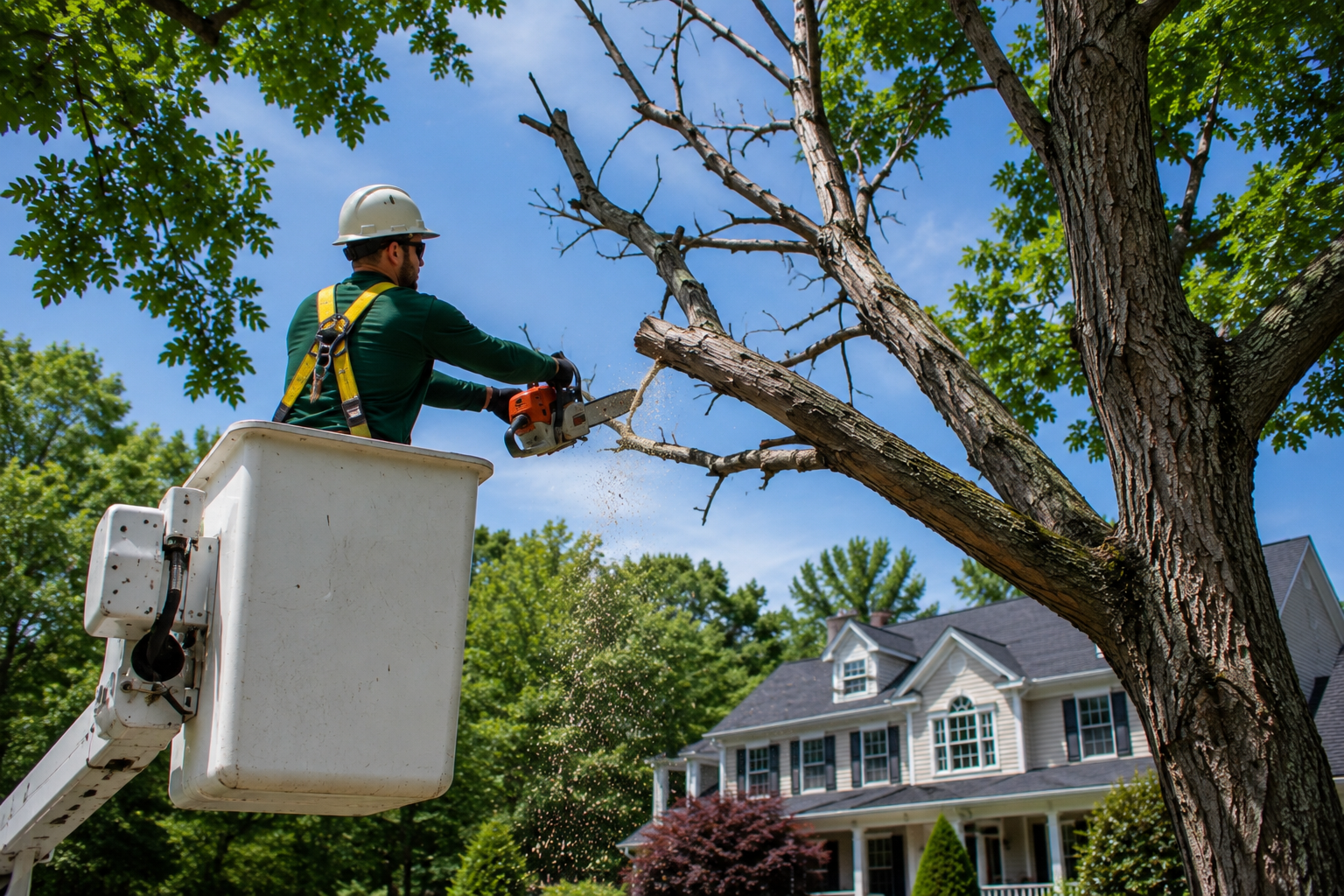
Professional Pruning Is More Than Cutting Branches
Proper pruning requires understanding tree structure, biology, species, condition, and long-term growth.
Professional pruning may be used to:
- Remove deadwood
- Address damaged limbs
- Improve clearance
- Reduce certain structural concerns
- Support canopy health
- Improve the appearance of the tree
However, more pruning is not automatically better.
Removing excessive live growth can place unnecessary stress on a tree.
The goal should be thoughtful, targeted pruning based on what the individual tree actually needs.
Storms Can Reveal Existing Weaknesses
Strong storms do not always create tree problems. Sometimes, they reveal problems that were already present.
A weakened branch may remain attached during calm weather but fail when exposed to high winds.
Northern New Jersey properties can experience:
- Thunderstorms
- Heavy rainfall
- Strong winds
- Snow
- Ice
These changing conditions place additional loads on mature canopies.
Homeowners throughout Andover, Blairstown, Newton, and Hackettstown should consider checking trees after significant weather events, particularly when large branches extend over frequently used areas.
Dead Branches Can Affect Curb Appeal
Safety and tree health are the most important concerns, but deadwood also affects appearance.
A mature tree filled with dead branches can make an otherwise well-maintained property look neglected.
Professional pruning helps create a cleaner canopy while preserving the natural character of the tree.
This can be especially valuable for:
- Homes preparing for sale
- Commercial properties
- Apartment communities
- Professional offices
- Retail properties
Healthy, well-maintained trees contribute to a polished landscape and stronger first impression.
Commercial Properties Have Additional Considerations
Deadwood on commercial properties can affect far more than appearance.
Branches may extend above:
- Employee parking
- Customer walkways
- Delivery areas
- Outdoor seating
- Building entrances
- Internal roadways
Property managers throughout Morristown, Randolph, Roxbury, Denville, and surrounding areas can benefit from including professional tree inspections in routine property maintenance.
Preventive tree care can also make maintenance expenses easier to plan rather than waiting for unexpected emergencies.
Fertilization May Support Overall Tree Health
When declining branches are related to poor nutrition or unfavorable soil conditions, professional fertilization may become part of a broader care plan.
Trees growing in landscaped environments often compete with lawns and ornamental plants for available resources.
Soil can also become depleted or compacted.
Appropriate fertilization may help support:
- Root development
- Healthy foliage
- Recovery from environmental stress
- Long-term vigor
Fertilization is not a cure for dead branches, however.
A dead limb will not become alive again simply because fertilizer is applied.
The objective is to improve the health of the remaining tree when soil and nutritional conditions indicate that treatment is appropriate.
Shrub Care Supports the Overall Landscape
Tree health is only one part of property maintenance.
Overgrown shrubs can reduce airflow, hide developing problems, and make landscapes feel crowded.
Professional shrub care can improve:
- Plant structure
- Air circulation
- Visibility
- Curb appeal
- Overall landscape organization
When trees and shrubs are maintained together, the entire property can benefit from a more balanced approach.
Preventive Care Can Reduce Emergency Situations
Emergency tree work often occurs when a problem has progressed too far.
A large branch may fall across a driveway. A damaged limb may remain suspended over a walkway. A severely declining tree may become unstable.
Preventive maintenance gives property owners more control.
Rather than reacting after something breaks, professional inspections allow potential concerns to be identified and prioritized.
This is particularly important for mature trees located near buildings and frequently used outdoor spaces.
When Does Branch Dieback Suggest a Larger Tree Problem?
One isolated dead branch does not necessarily mean an entire tree is declining.
However, professional evaluation becomes increasingly important when property owners notice:
- Multiple dead branches
- Rapid canopy thinning
- Large areas without leaves
- Cracks in major limbs
- Fungal growth around the trunk
- Bark deterioration
- A new lean
- Root disturbance
- Repeated branch failures
The combination of several warning signs may indicate a more significant problem.
Sometimes Tree Removal Is Necessary
Our goal is to preserve healthy, valuable trees whenever appropriate, but some trees eventually reach a condition where removal becomes the safer option.
Tree removal may be considered when:
- Structural integrity is severely compromised
- Root failure is developing
- Decline is extensive
- The tree is dead
- Major defects create unacceptable risk
- The tree cannot reasonably be preserved
Professional evaluation helps property owners understand the condition of the tree and the available options.
A Complete Tree Care Program Provides Better Protection
Deadwood management is most effective when it is part of comprehensive tree care.
Depending on the property, a professional program may include:
- Tree inspections
- Professional pruning
- Tree fertilization
- Organic pest control
- Soil management
- Shrub care
- Tree removal when necessary
For properties where outdoor comfort is also a priority, mosquito and tick control can complement landscape maintenance by addressing pests that affect how families, customers, and employees use outdoor spaces.
At Global Shade Tree Professionals, we believe every service should support the broader goal of creating healthier, safer, and more enjoyable properties.
Frequently Asked Questions
Does every dead tree branch need to be removed?
Not every small dead branch represents an immediate hazard, but deadwood should be professionally evaluated, particularly when located over homes, driveways, walkways, patios, or parking areas.
How can I tell whether a branch is dead?
Dead branches may have no leaves during the growing season, brittle twigs, peeling bark, or dry wood. Professional inspection can confirm branch condition.
Can dead branches become healthy again?
Once branch tissue is truly dead, it cannot return to life. The underlying cause of the dieback should still be investigated.
Why are several branches dying at the same time?
Multiple declining branches may indicate drought stress, root problems, insects, disease, soil issues, or broader tree decline.
Can dead branches fall without a storm?
Yes. Severely weakened branches can fail even during relatively calm weather.
Will pruning make my tree healthier?
Appropriate professional pruning can remove dead or damaged material and address certain structural concerns. The amount and type of pruning should be based on the individual tree.
Can insects cause branch dieback?
Yes. Certain insects can damage leaves, bark, branches, or internal tissues and contribute to canopy decline.
Can poor soil cause branches to die?
Poor soil conditions can stress roots and reduce the tree’s ability to support healthy canopy growth.
Should commercial properties inspect trees more frequently?
Trees near parking lots, walkways, entrances, and other heavily used areas should be routinely evaluated because potential branch failure may affect more people and property.
Why choose Global Shade Tree Professionals?
We provide comprehensive tree and landscape services throughout Northern New Jersey, including professional tree care, pruning, tree removal, fertilization, organic pest control, shrub care, mosquito control, and tick control. Our focus is on identifying problems early and developing practical solutions based on the needs of each property.
Don’t Wait for a Dead Branch to Become an Emergency
Dead and dying branches are more than an appearance issue. They can reveal developing problems within the tree while creating unnecessary risks around homes, businesses, vehicles, and outdoor living areas.
At Global Shade Tree Professionals, we help residential and commercial property owners identify these warning signs before they become larger concerns.
We proudly provide professional tree care, tree pruning, tree removal, fertilization, organic pest control, shrub care, mosquito control, tick control, and preventive landscape services throughout Andover, Sparta, Denville, Kinnelon, Blairstown, Morristown, Newton, Hackettstown, Randolph, Roxbury, and surrounding Northern New Jersey communities.
Phone: 973-398-0682
Email: globalshadetree@aol.com
Contact Global Shade Tree Professionals today to schedule a professional tree evaluation and take a proactive approach to keeping your trees, property, and outdoor spaces healthier and safer for years to come.